- UnisaIR Home
- →
- Unisa Creative Outputs
- →
- Visual Arts
- →
- Art Exhibitions
- →
- View Item
JavaScript is disabled for your browser. Some features of this site may not work without it.
Agency of Objects
Miller, Gwenneth
Date:
2025-04-02
Type:
Other
Abstract:
A three-month residency in Europe culminated in an itinerant solo titled “Agency of objects”. The research embraced the challenge to imbue objects with anecdotes and stories that I encountered in the brief visits to Ponte de Mucela, Porto, and Madrid and the extended stay in Paris. The experience sensitised me to the lives of individuals immersed in times of interruption whilst striving to sustain a livelihood. As I identified objects of interest, I questioned the way these objects suggest socio-cultural context and searched for ways to mediate an impelling presence of belonging. The research probed the extent to which objects can reveal something about relationships between people in transit and looked for modes of presentation that could suggest the agency of objects.
The aim to immerse myself in situ, further searched for ways to respond empathically to place and engagements, therefore probing the ability of inanimate objects to enable socio-cultural capacity. Archaeologist Christopher Tilley (2001:260) wrote that meaning is generated “out of situated, contextualised social action which is in continuous dialectical relationship” within structures, through media and with an outcome of action. It is thus from the use and context of objects that their agency arises, and furthermore, writing suggests that recontextualised objects can have the ability to enact change. This also alludes to the dialectical nature of art methodologies applied.
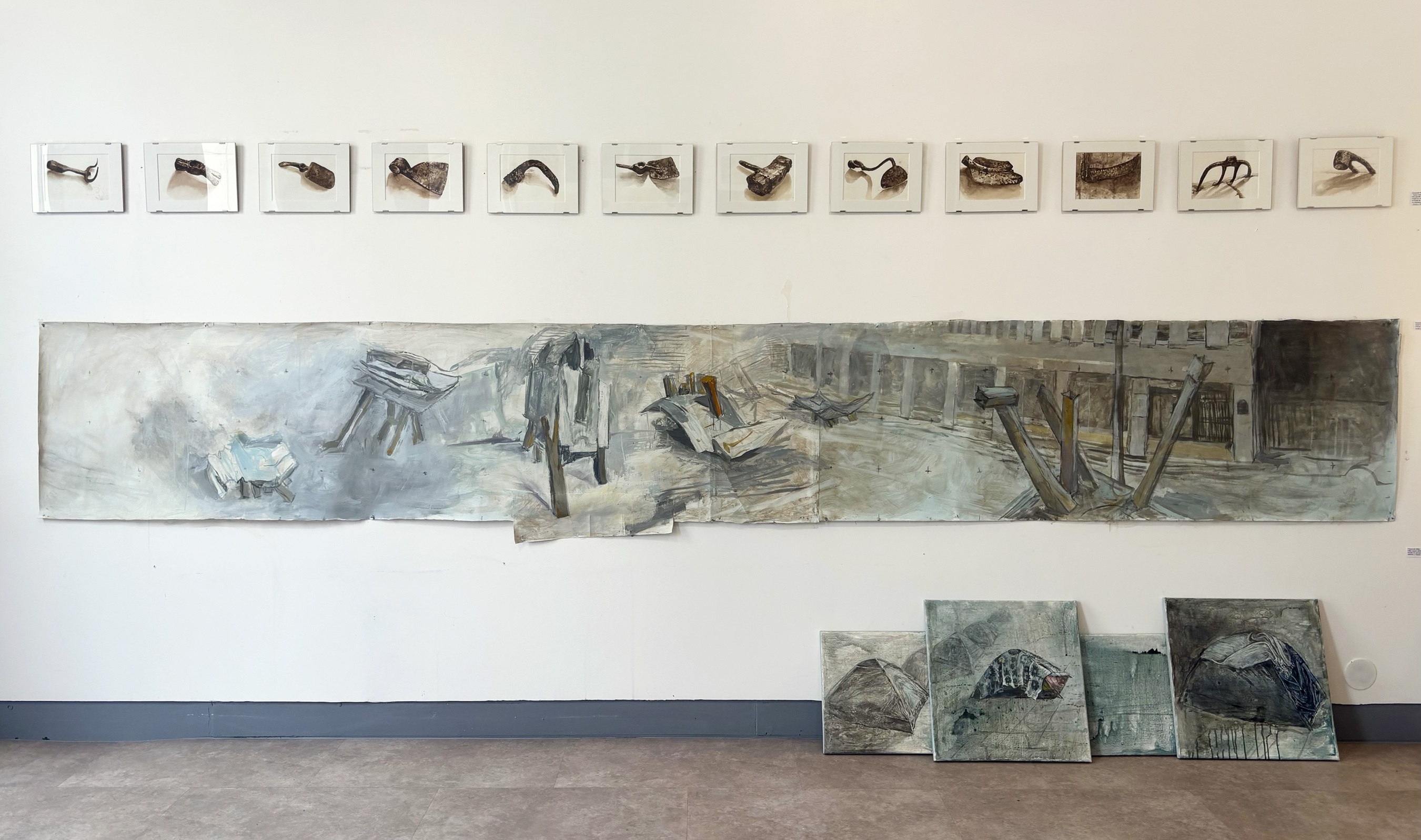
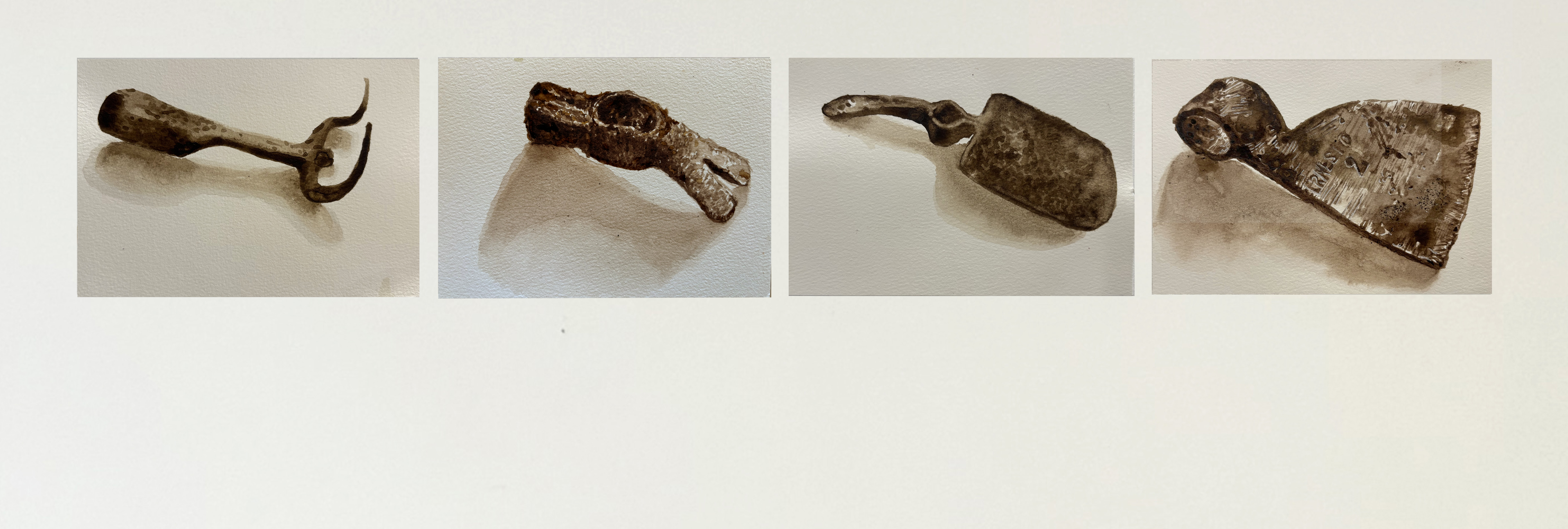
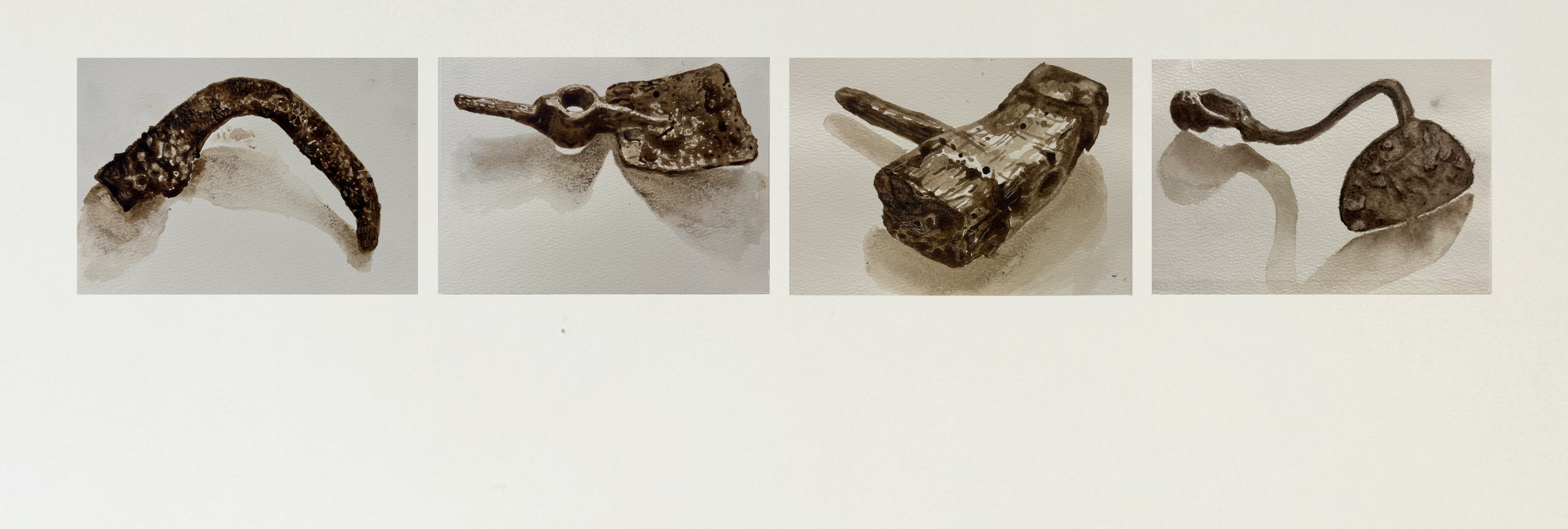
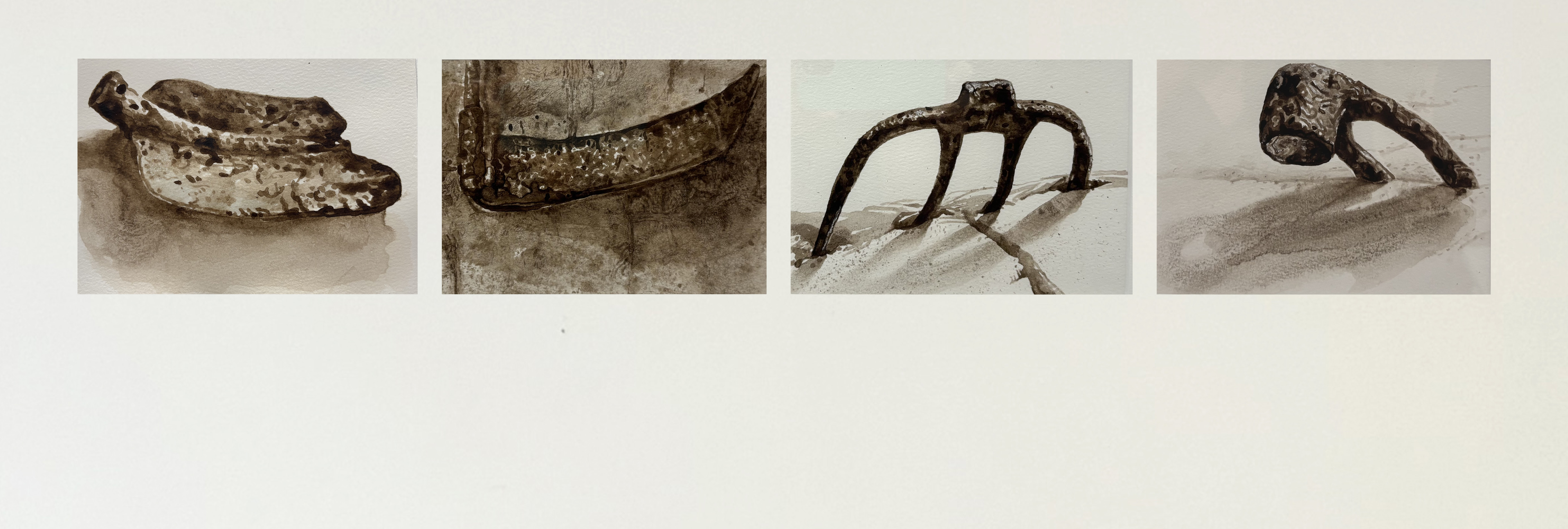
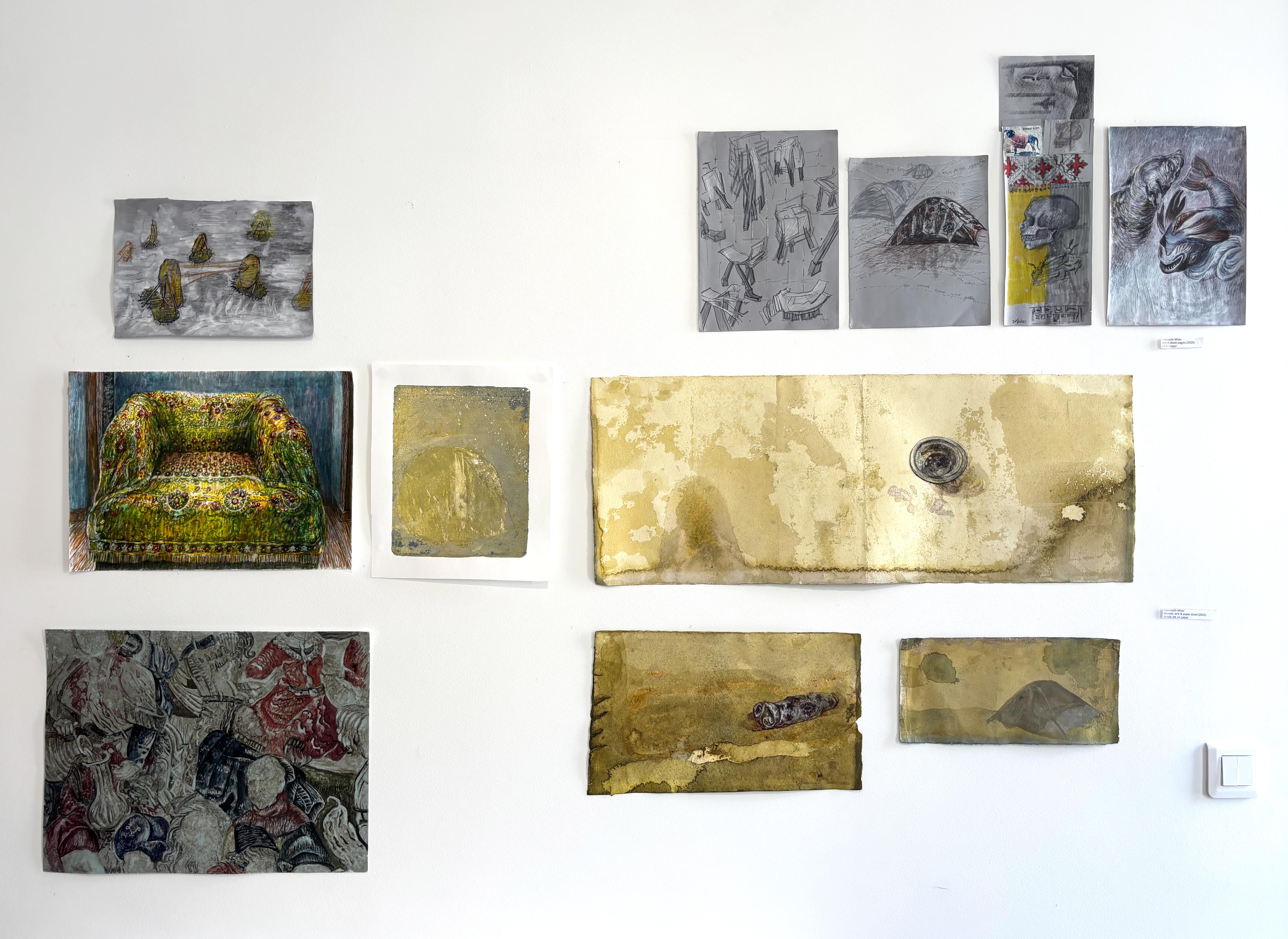
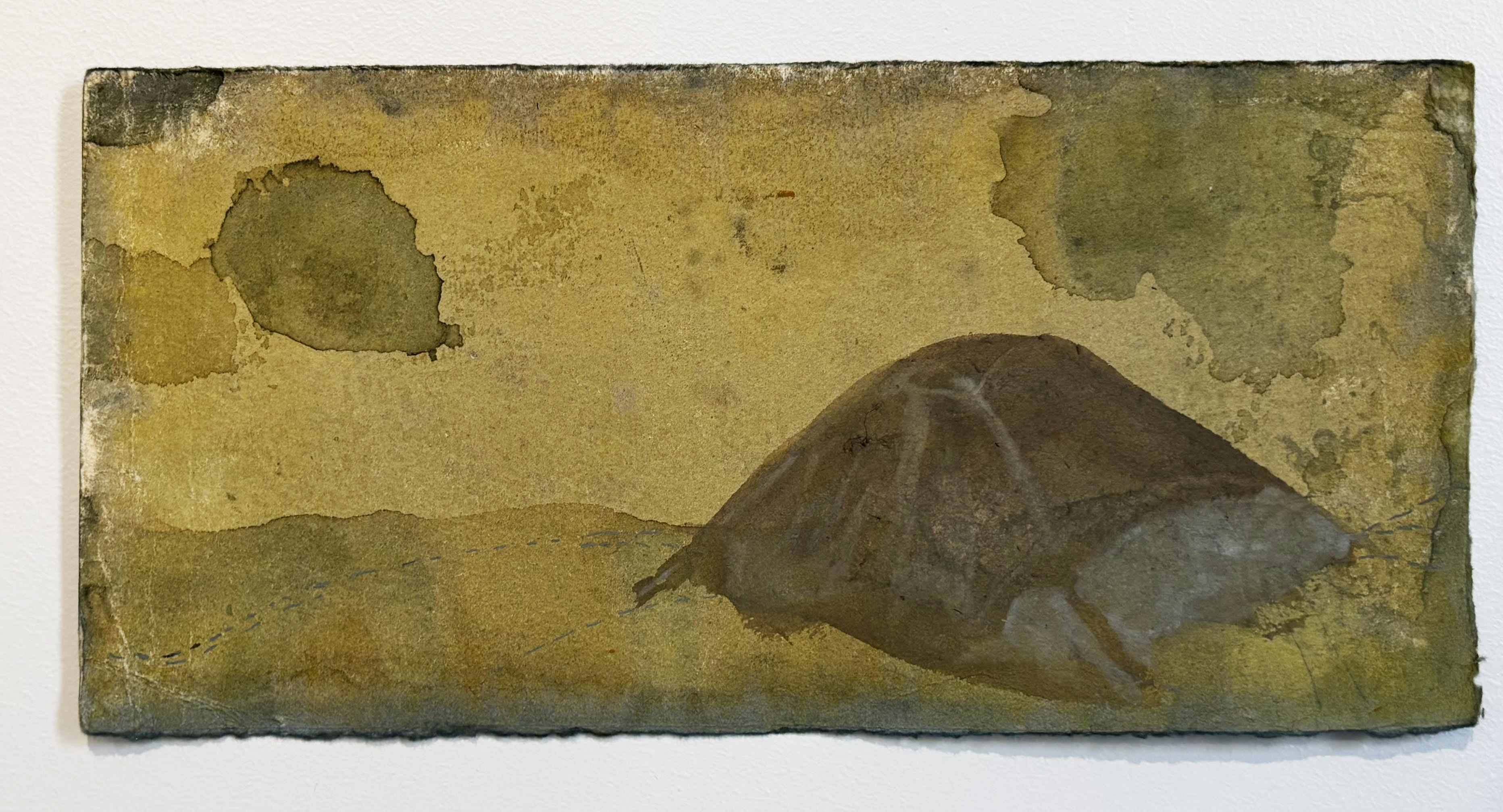
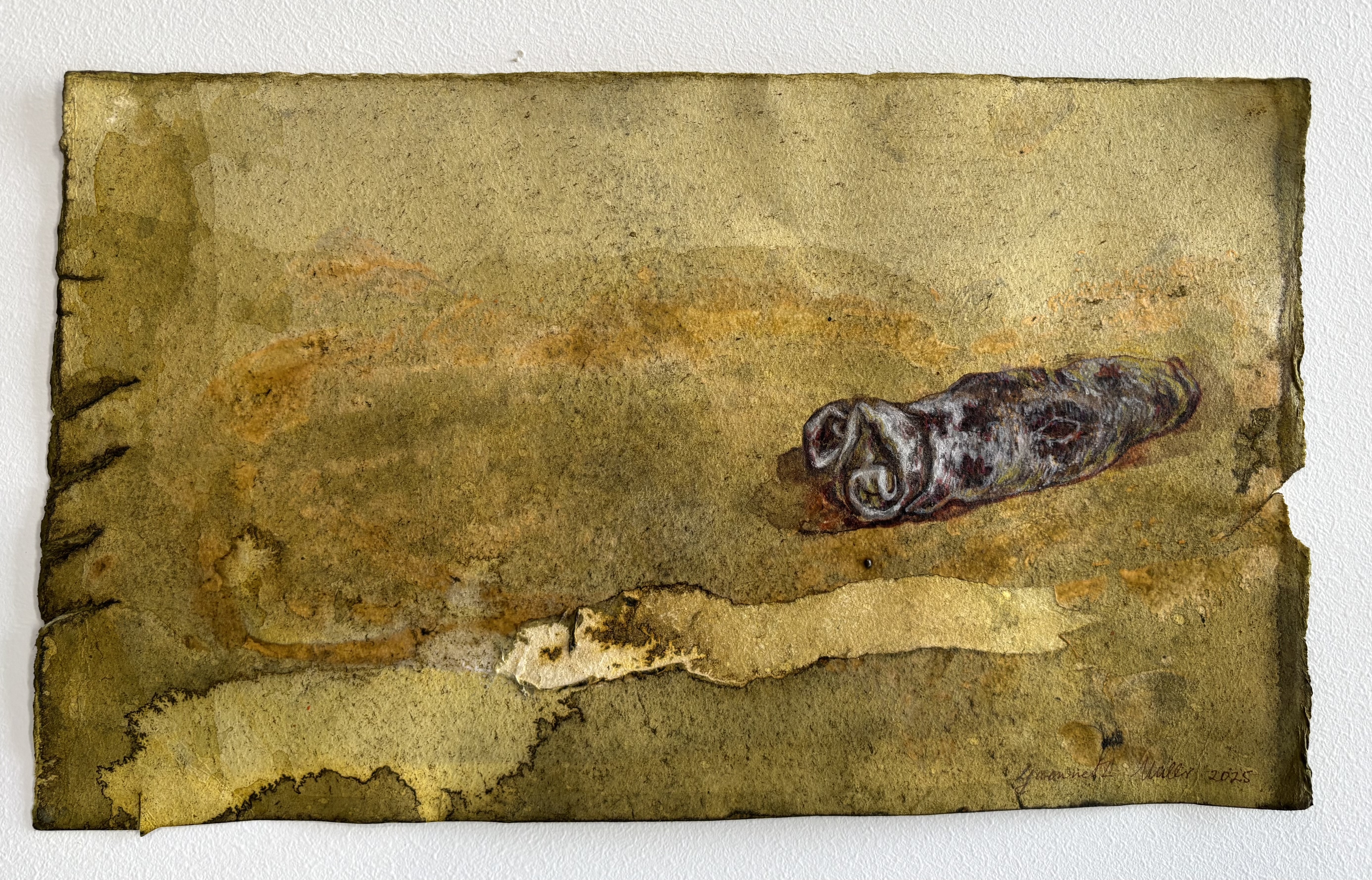
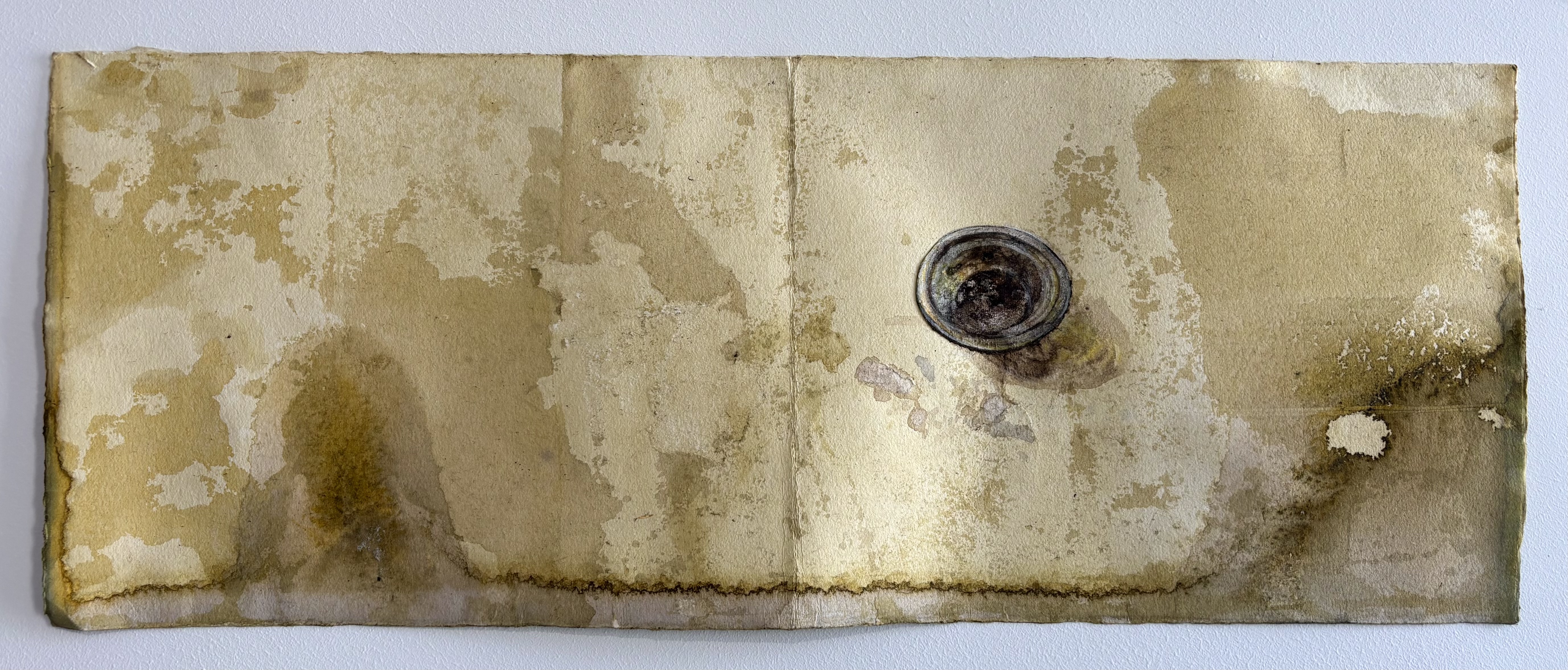
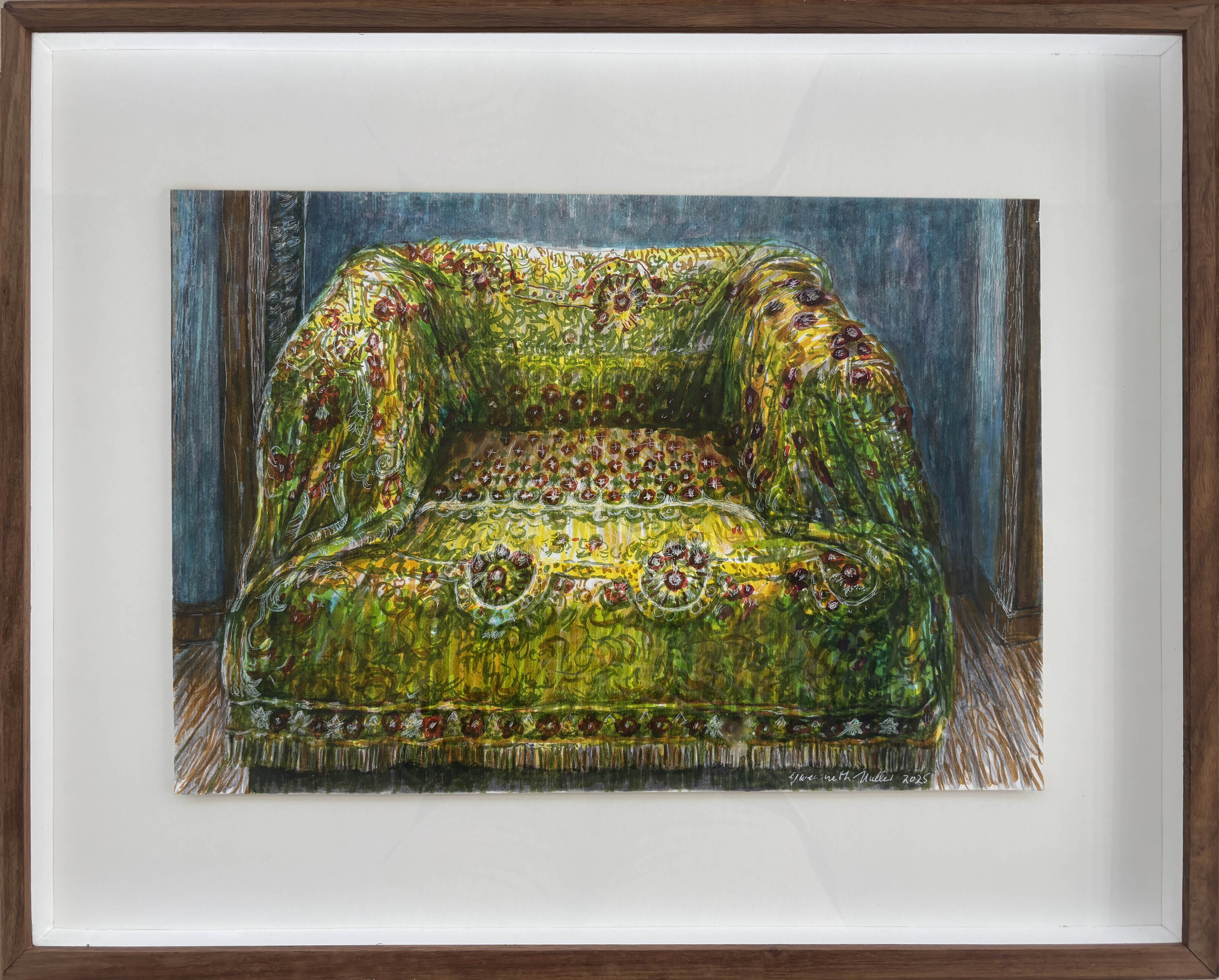
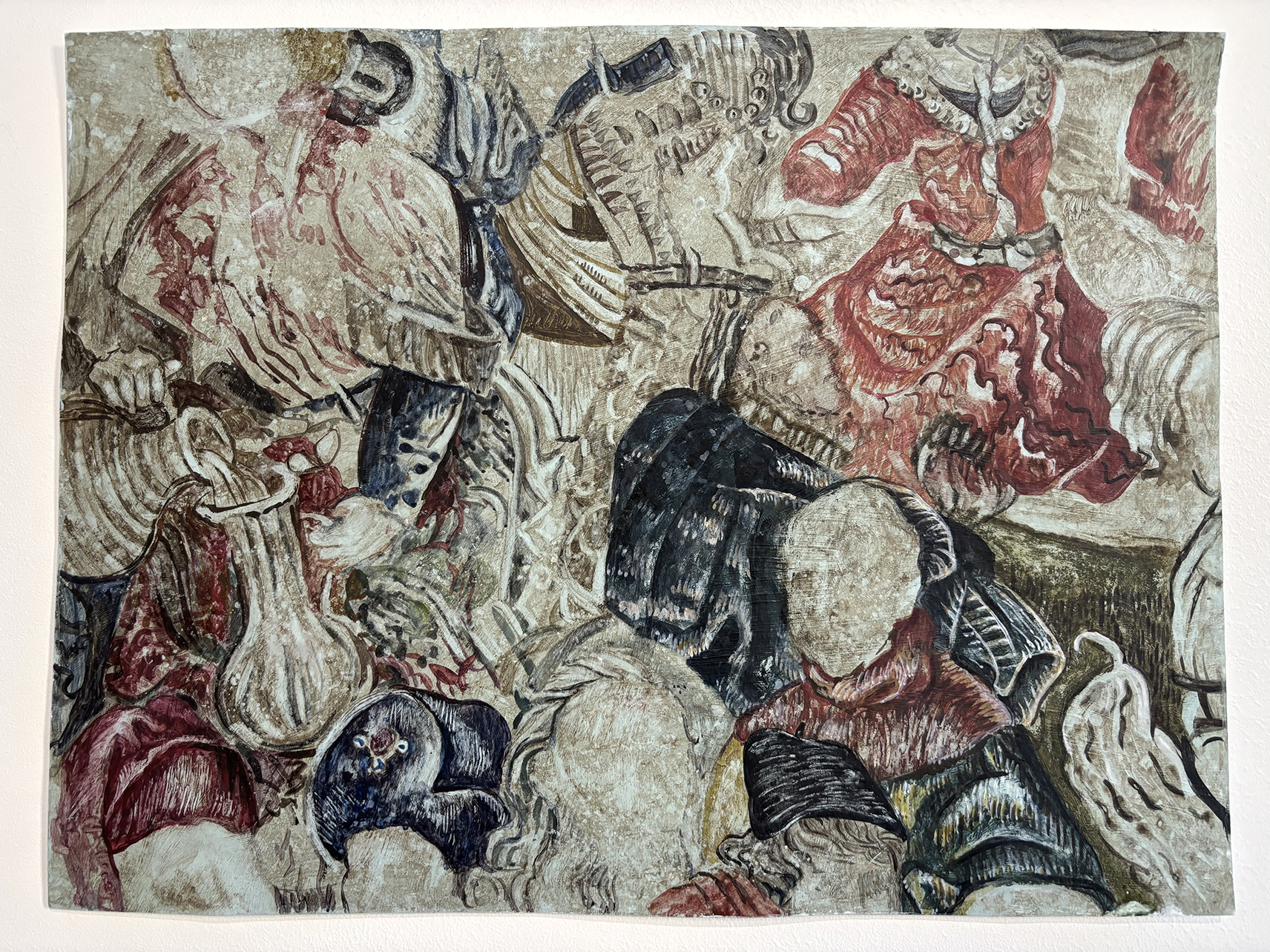
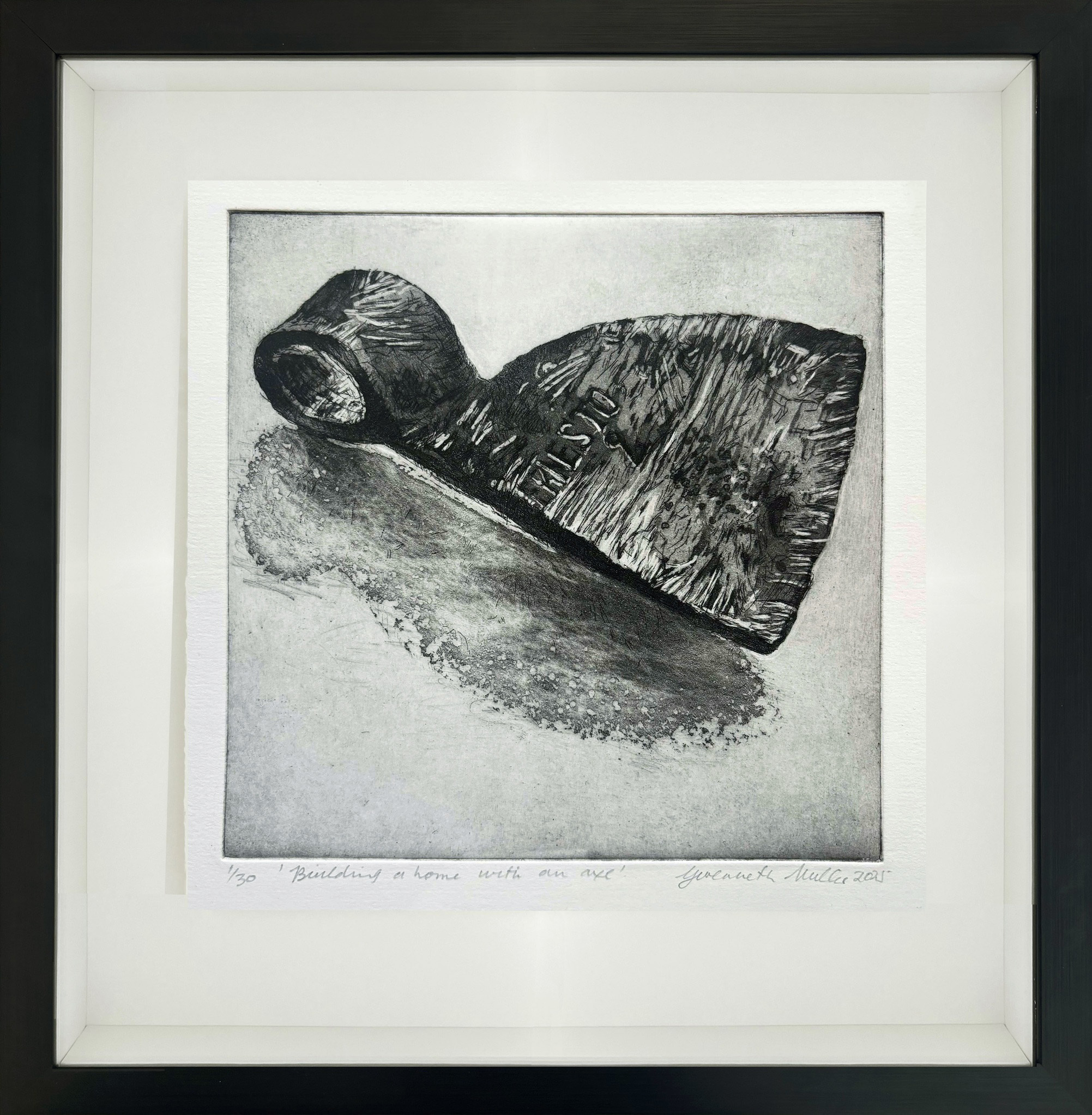
The series of twelve small drawings emerged through observation of discarded tools, damaged by the wildfires of 2017 in Portugal – tools used by local inhabitants to work the land and build their shelters. The “Tool” series is site-specific for more reasons: the ink was made from disintegrating walnut husks by my host and current resident artist Celia de Villers. She created the ink on the site where the walnut tree grows and where the recent fire scorched these tools. The selection was also conceptual and metaphoric, as the objects and their shadows speak of transience and people passing through a place with hope for a future. Lexicons of cyclical regeneration occur in the paintings I studied in Madrid: a gutted fish or a skull in Dutch still-lives, an empty paper plate of a passer-by, or the disappearing person in a faded tapestry.
The wall of sketches and prints on “Agency of objects” evidenced thinking through objects as markers of time, acknowledging comfort and discomfort in the finitude of life. The “agentive turn in social theory” can be linked as a scholarly framework within this theme, as it contextualises agency of humans and objects as relative (Tilley 2001:109, in Ethnography and Material Culture). Furthermore, body of work contributes to discourse around material culture, mirroring critical reflection of contemporary value systems as discussed by Appadurai (1986) in The Social Life of Things: Commodities in Cultural Perspective.
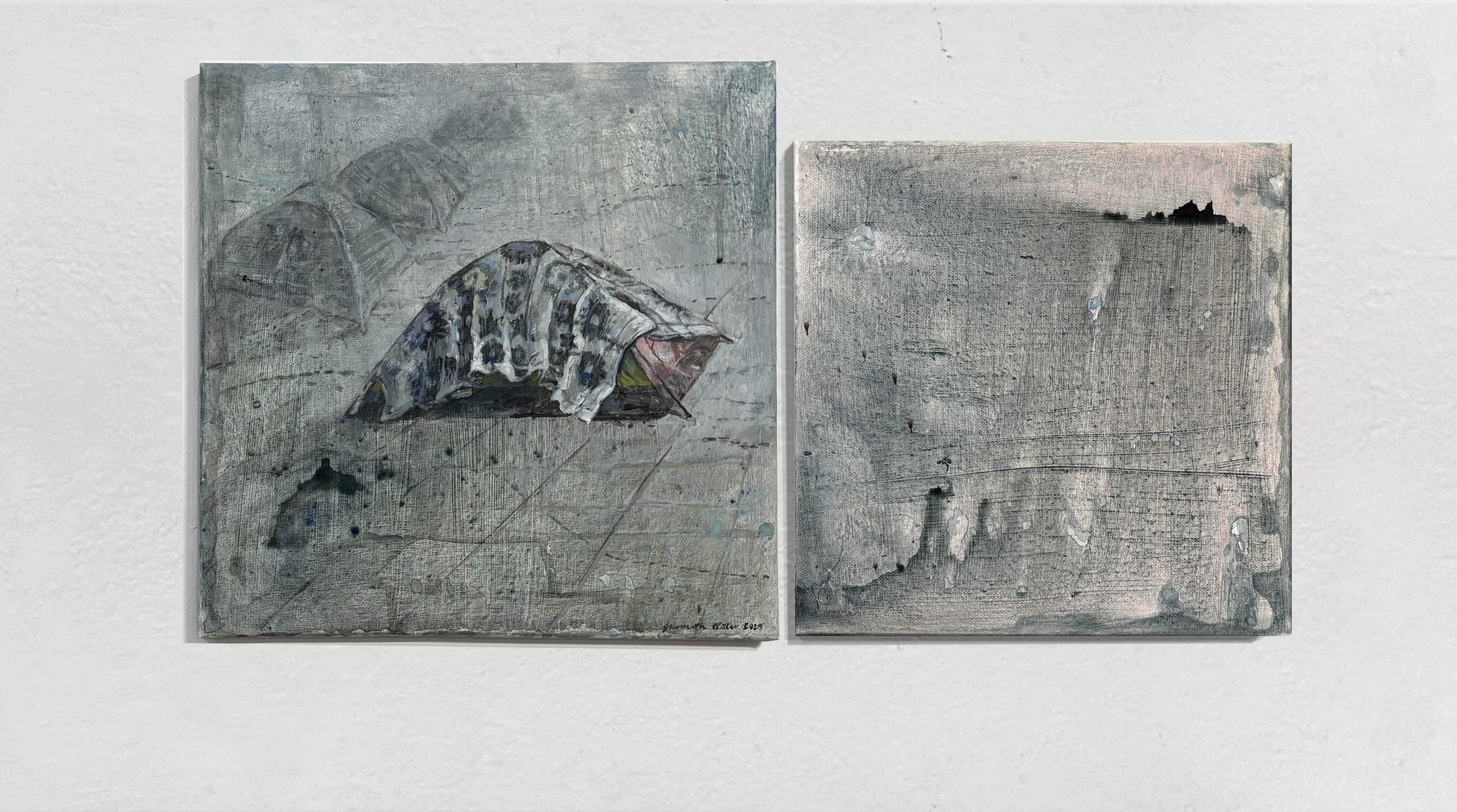
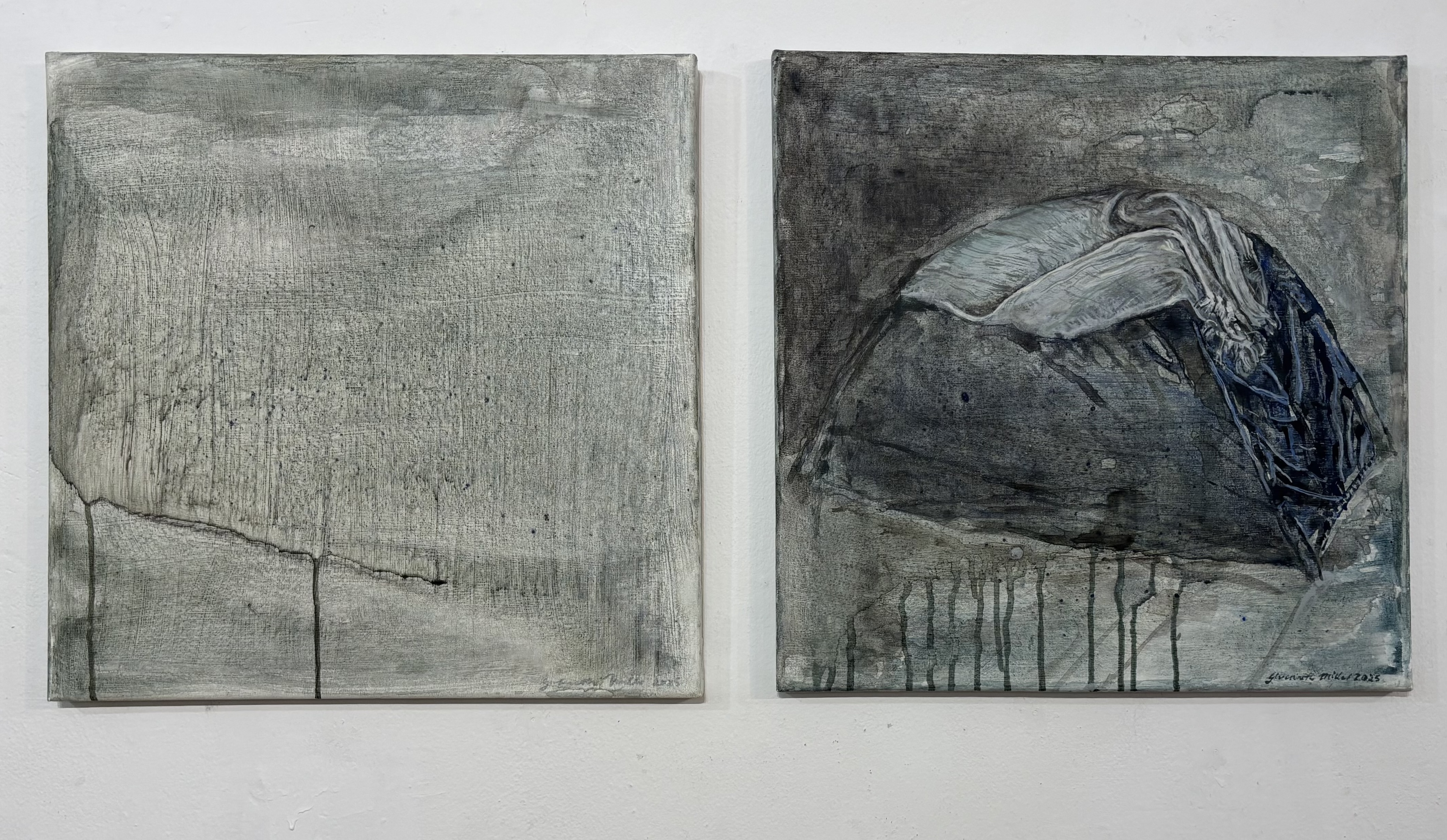
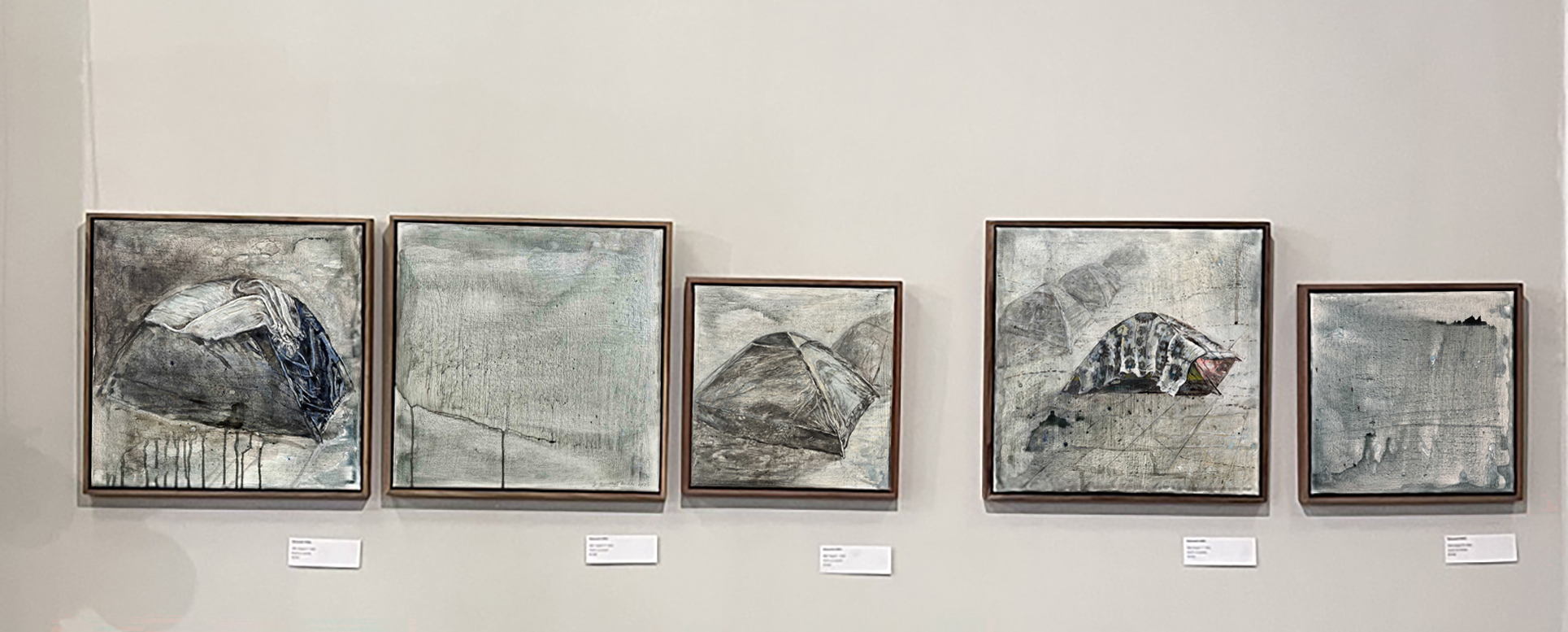
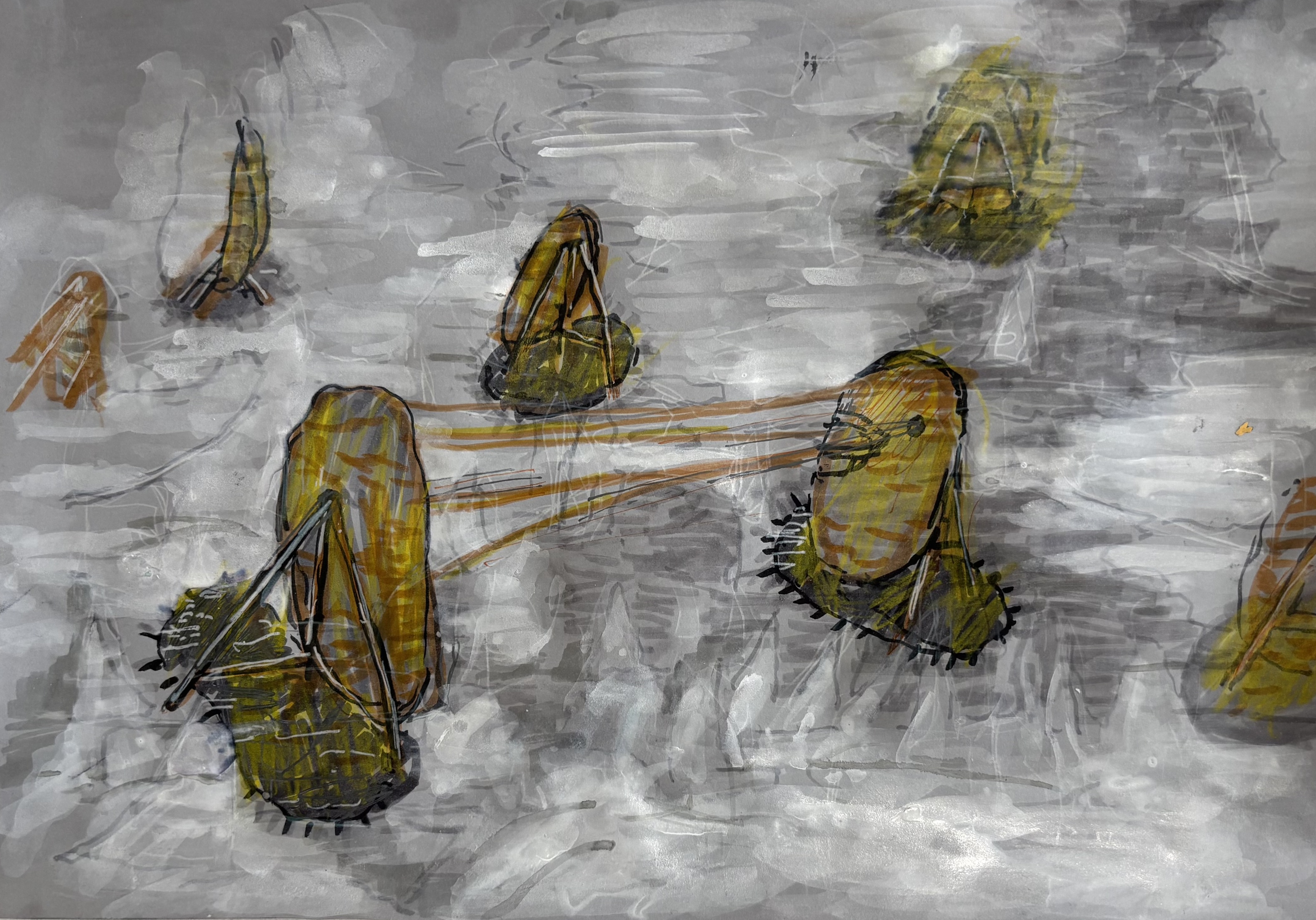
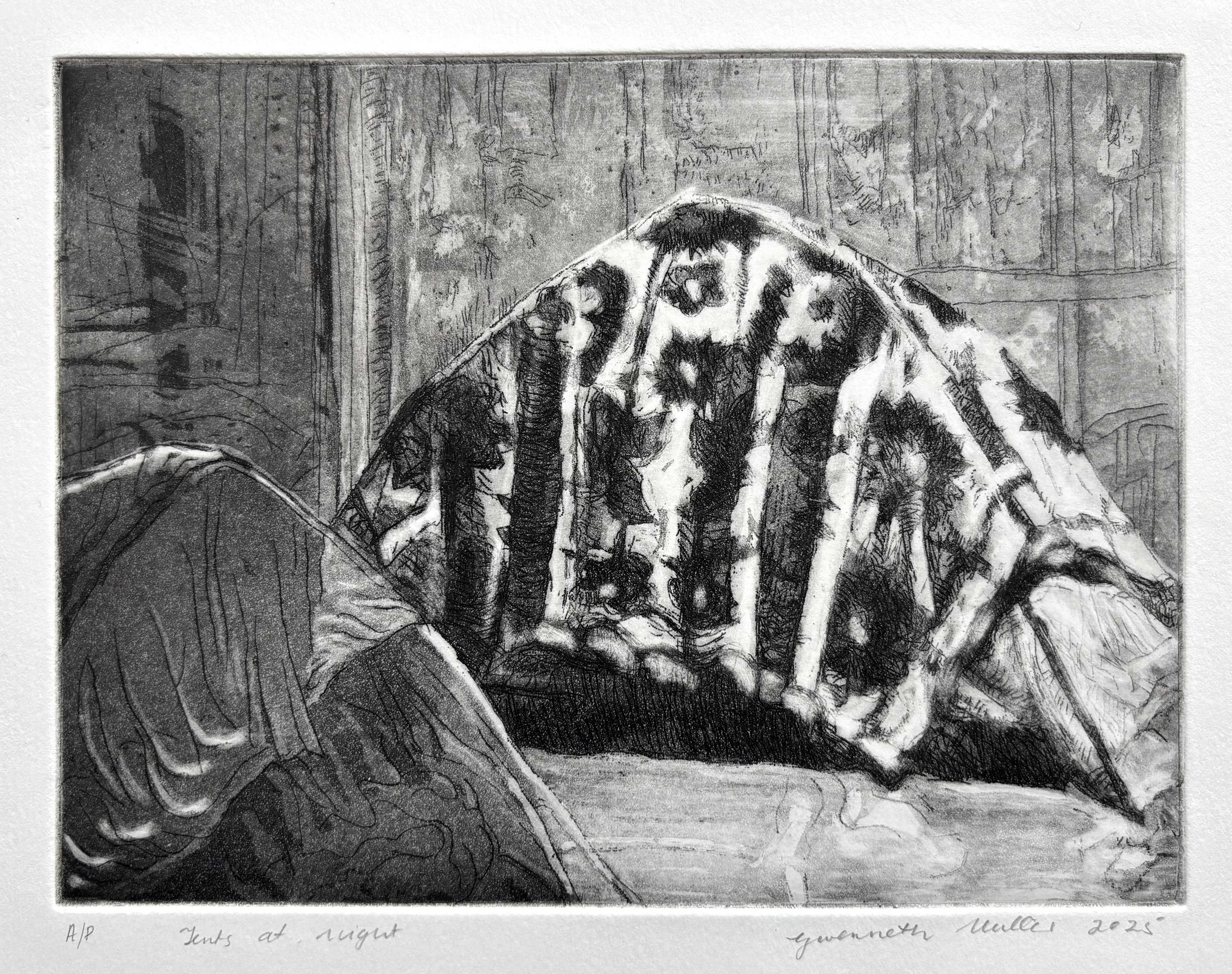
Living on-site in Paris, where artists come and go, I also become aware and very moved by the refugees of the city. The elongated structure of the Citè building offers a roof over the refugees as they pitch their tents every evening, just to dismantle them every morning. My exhibition carefully considered placement as part of the composition; for example, a floor installation of paintings particularly pondered the 'throw-away' existence of the tent dwellers. The body of work contributes to reflection of the tension between belonging and not belonging of objects in relation to global currencies and shifting uncertainties.
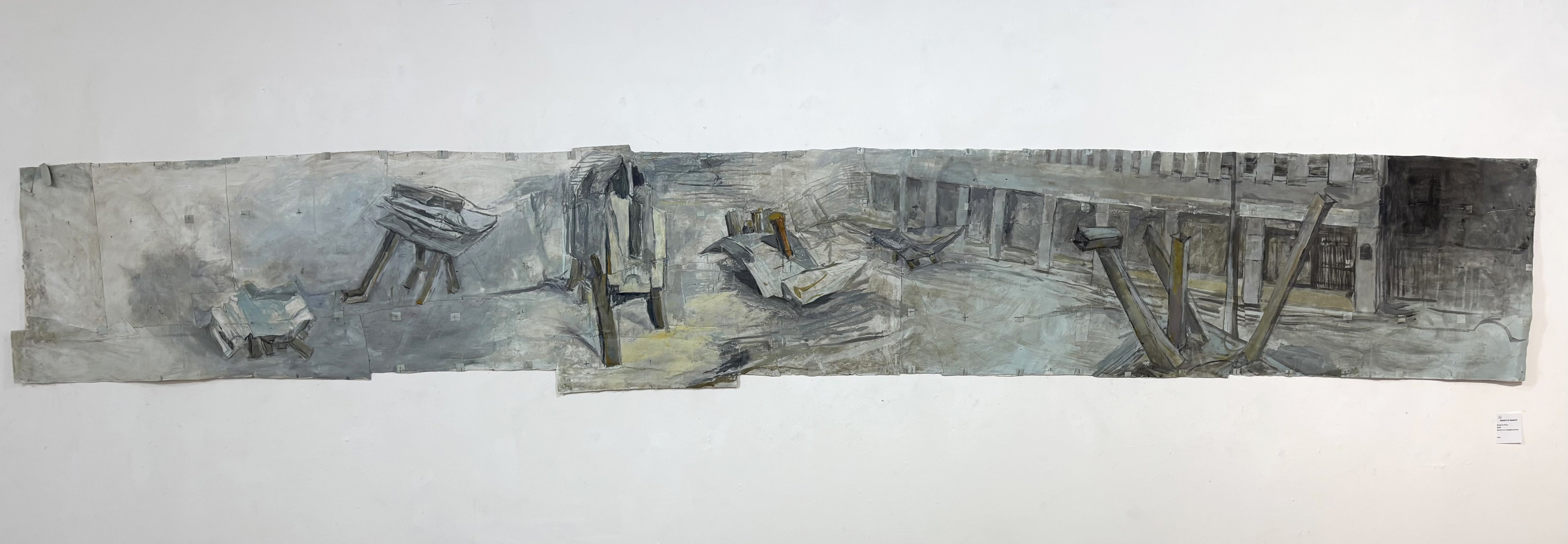
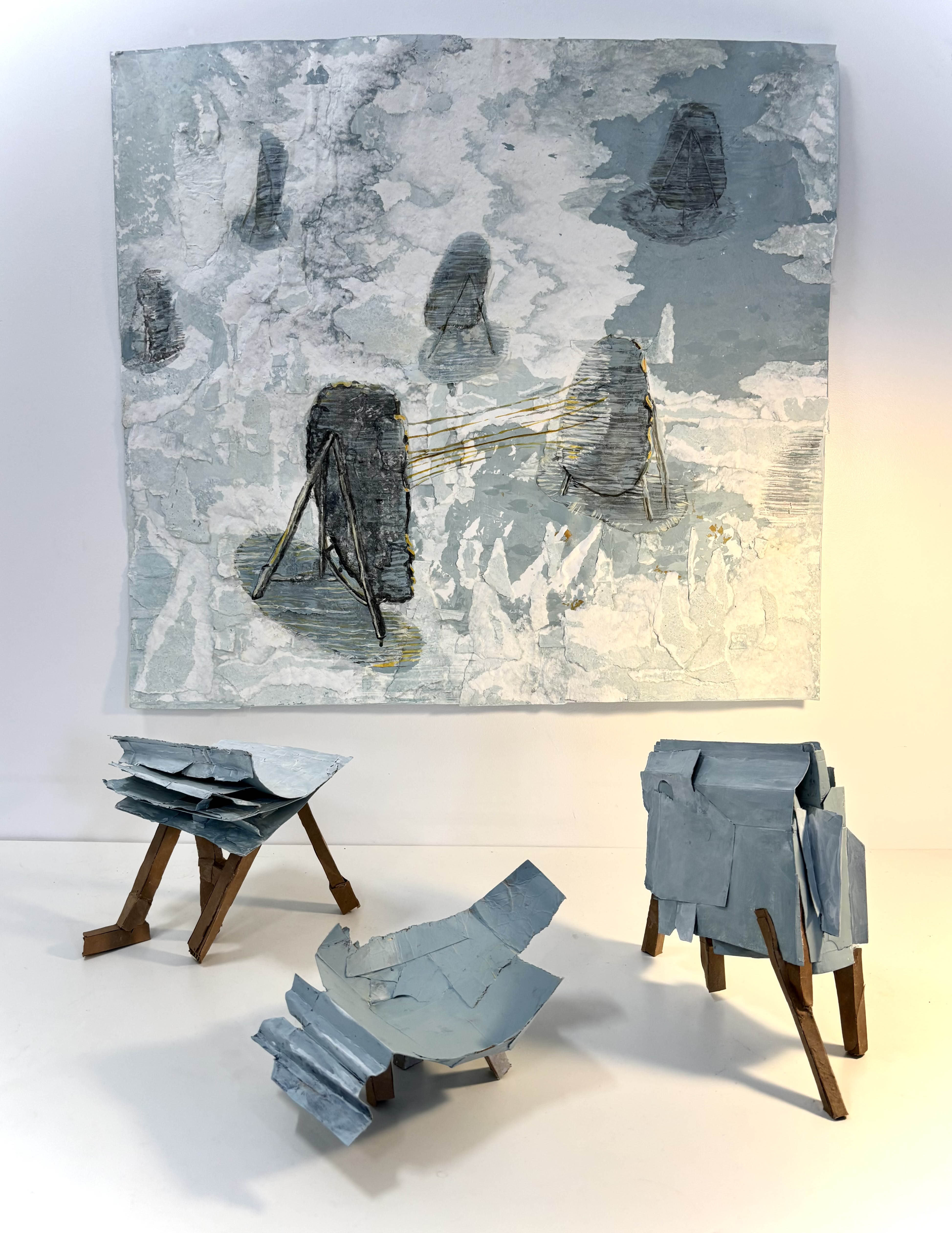
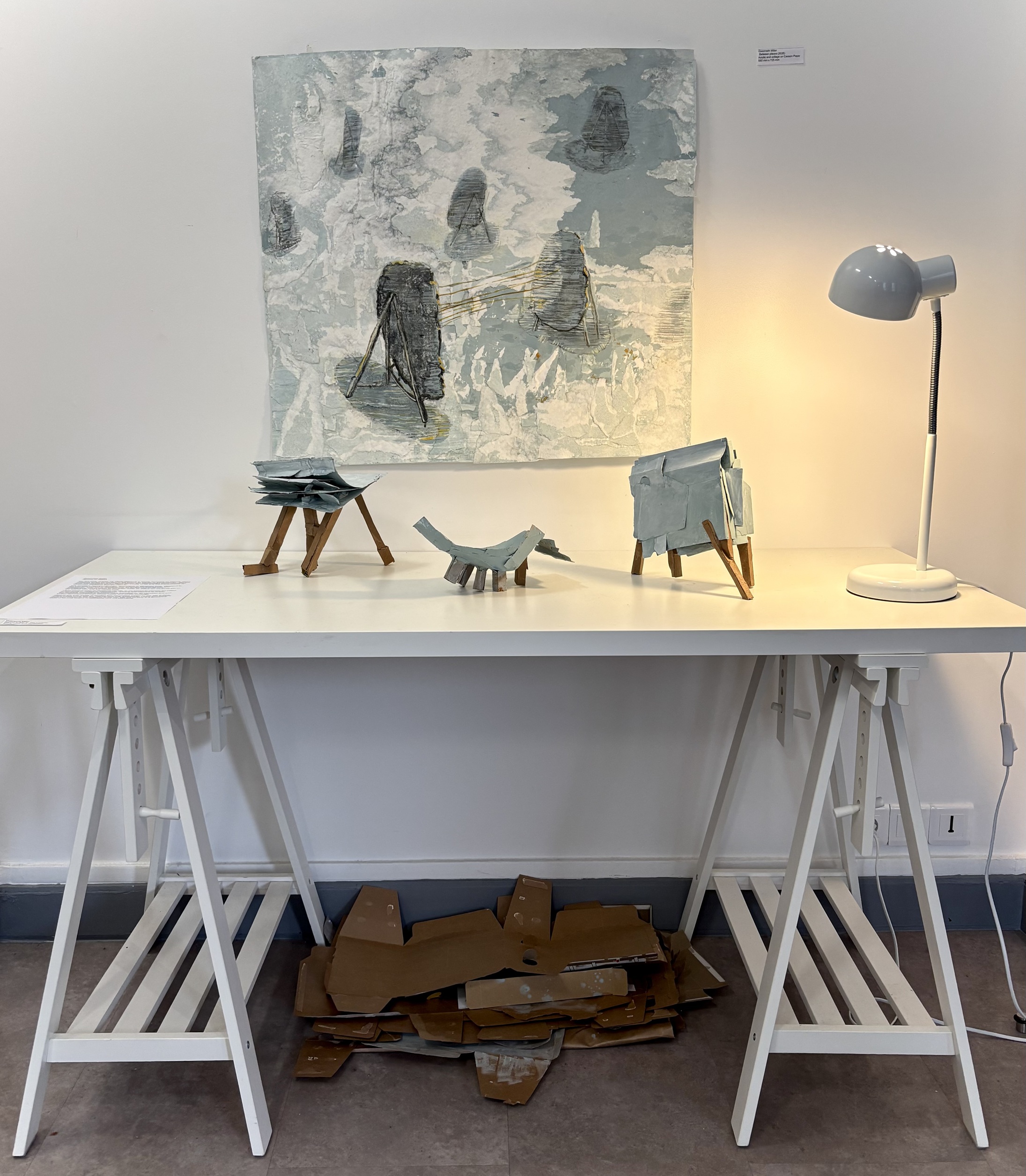
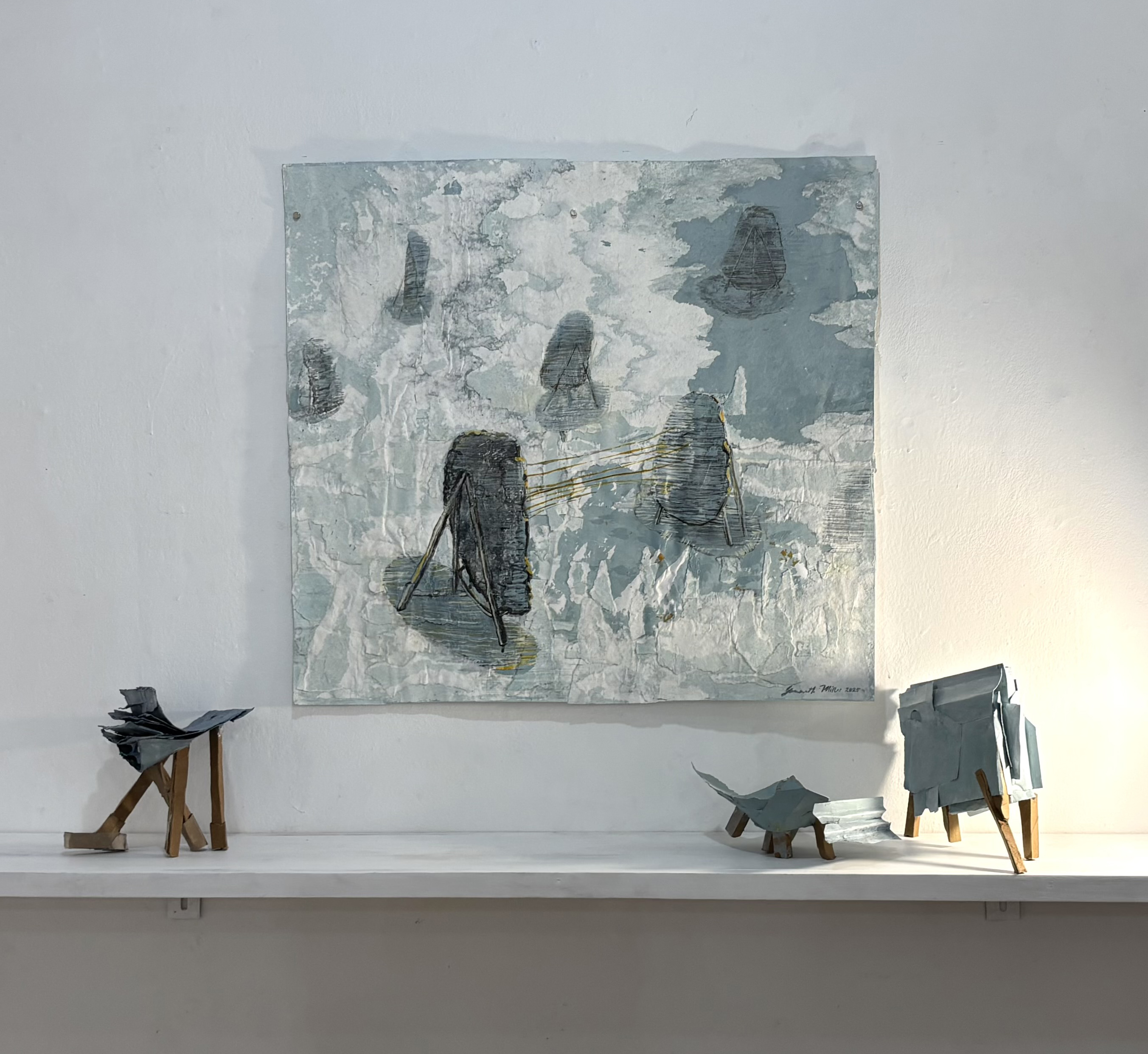
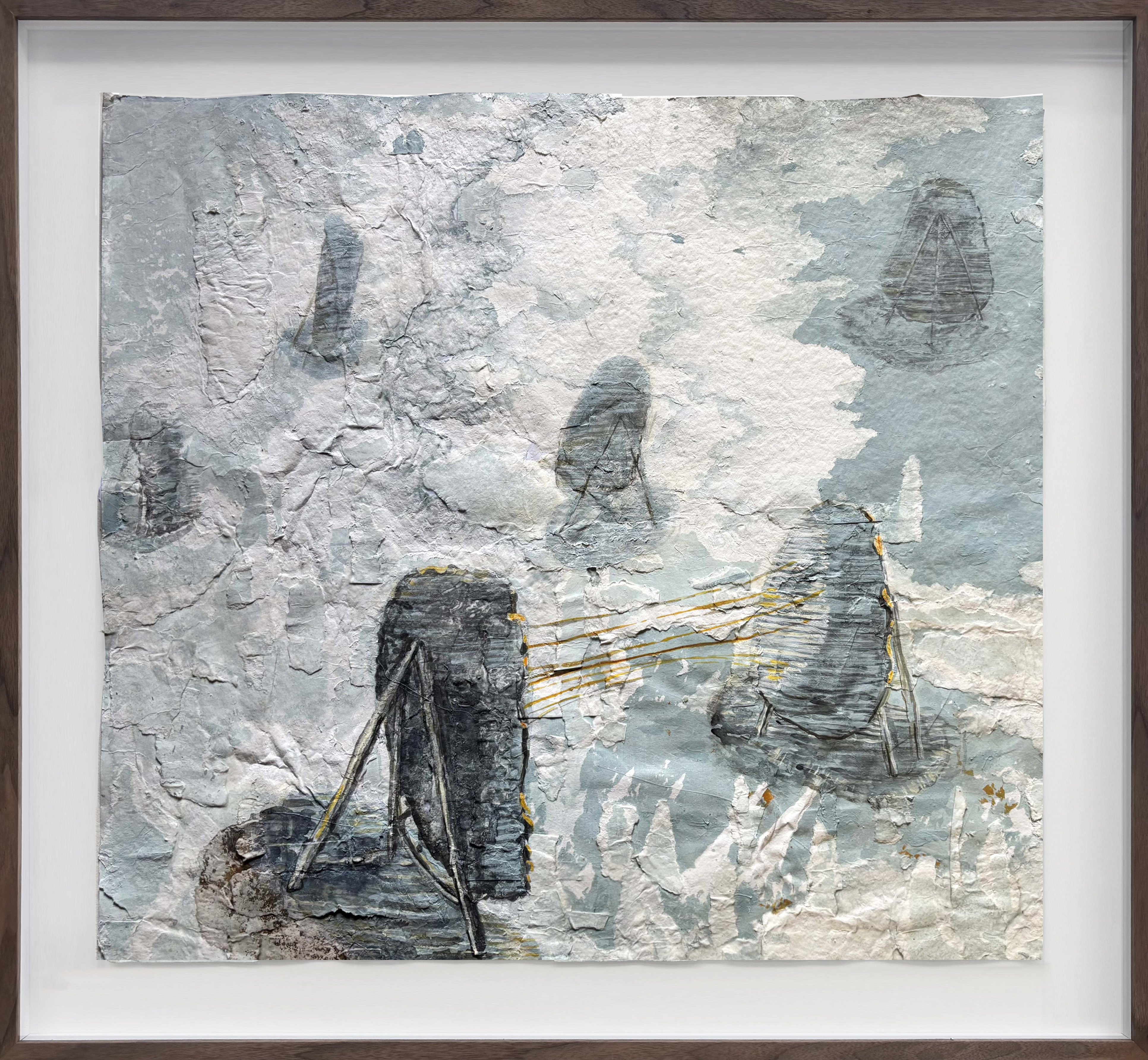
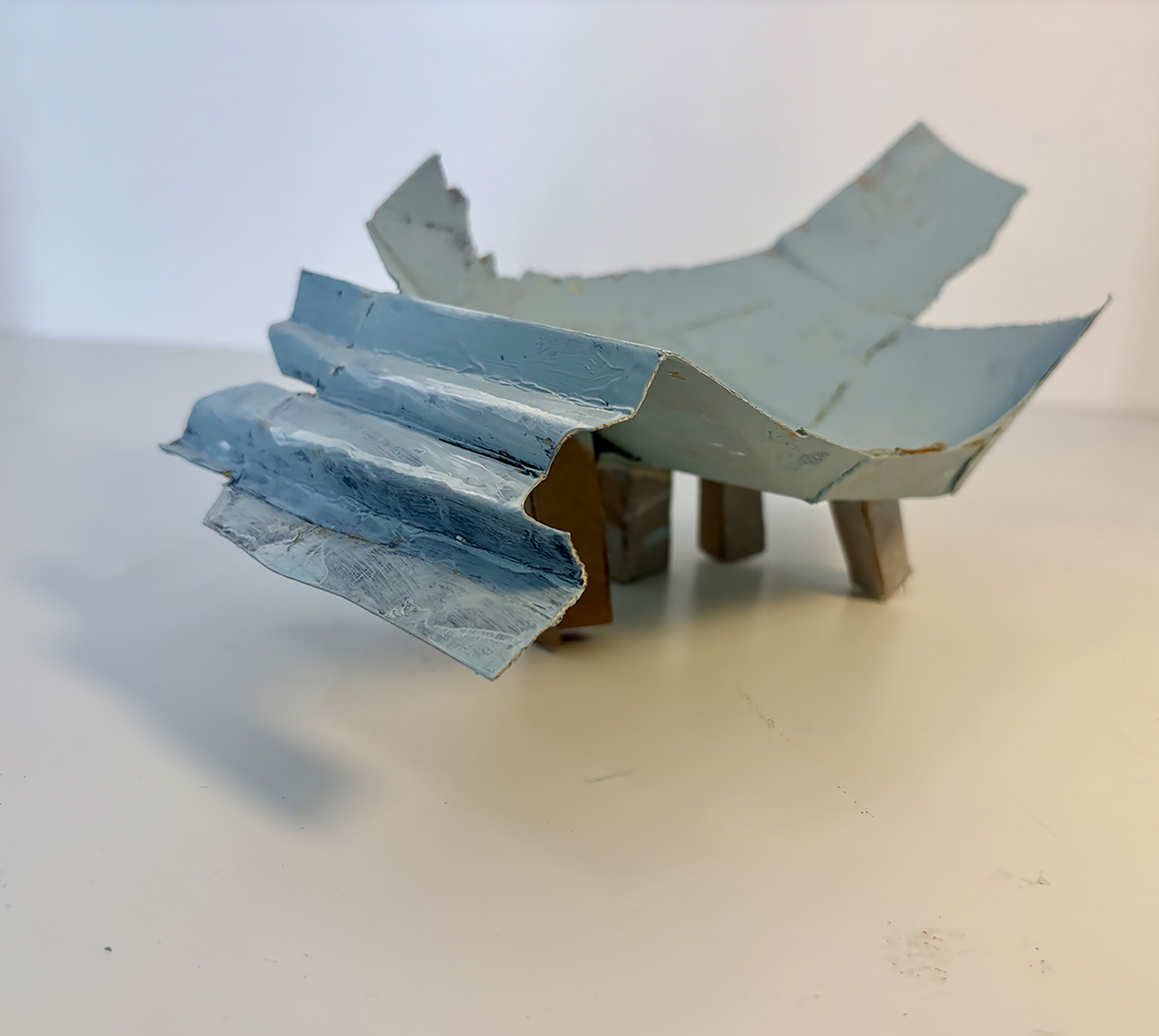
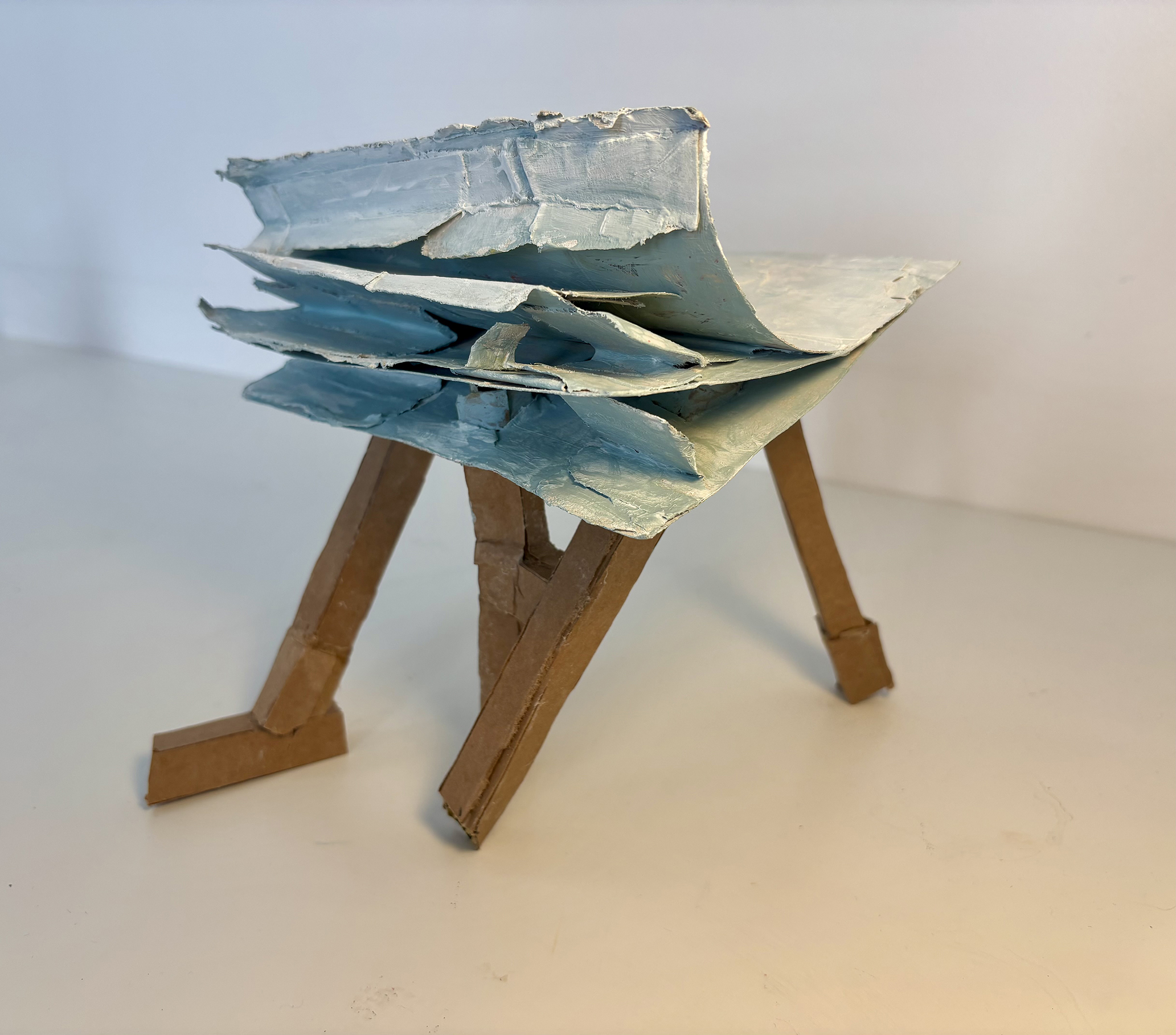
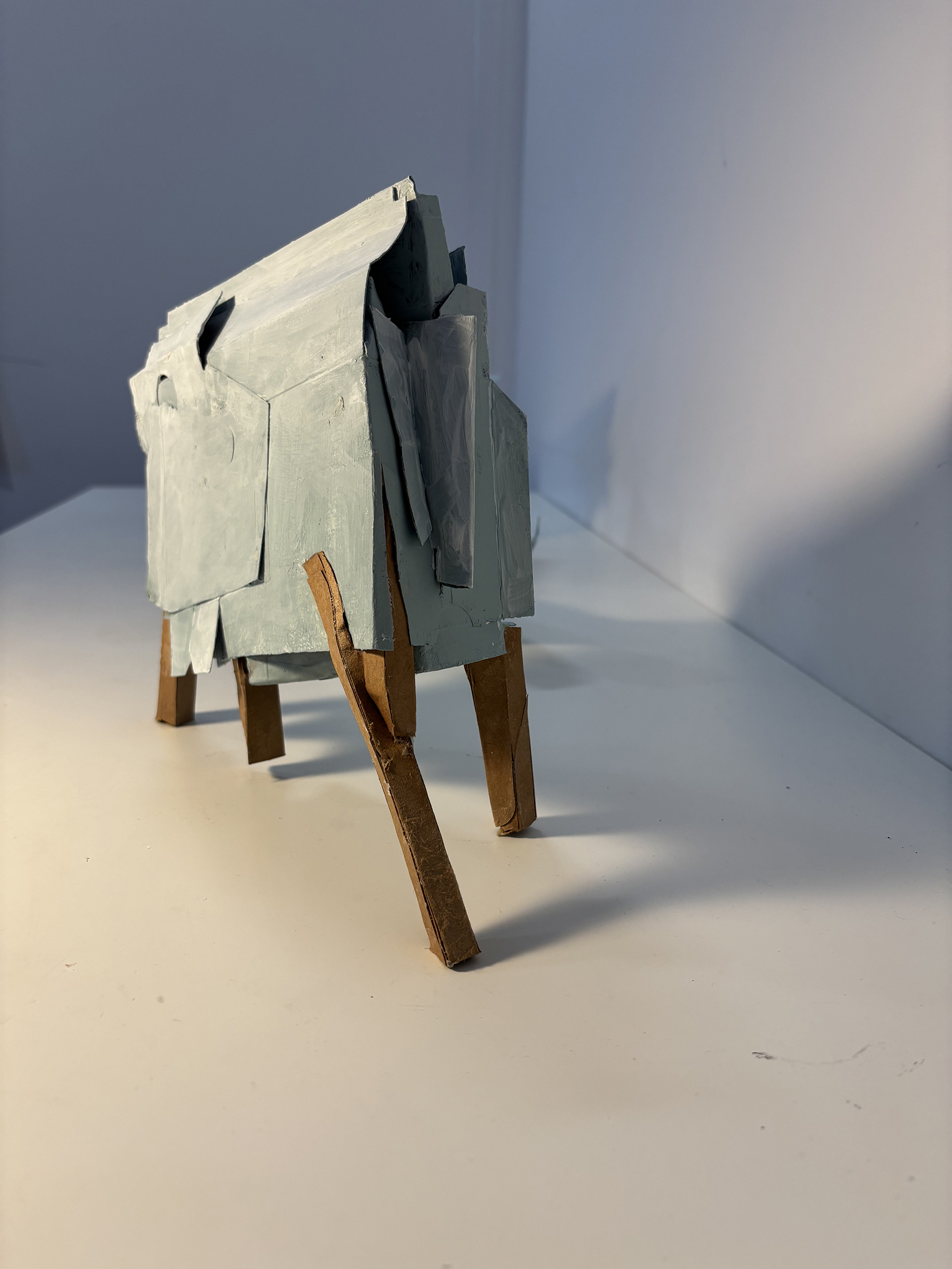
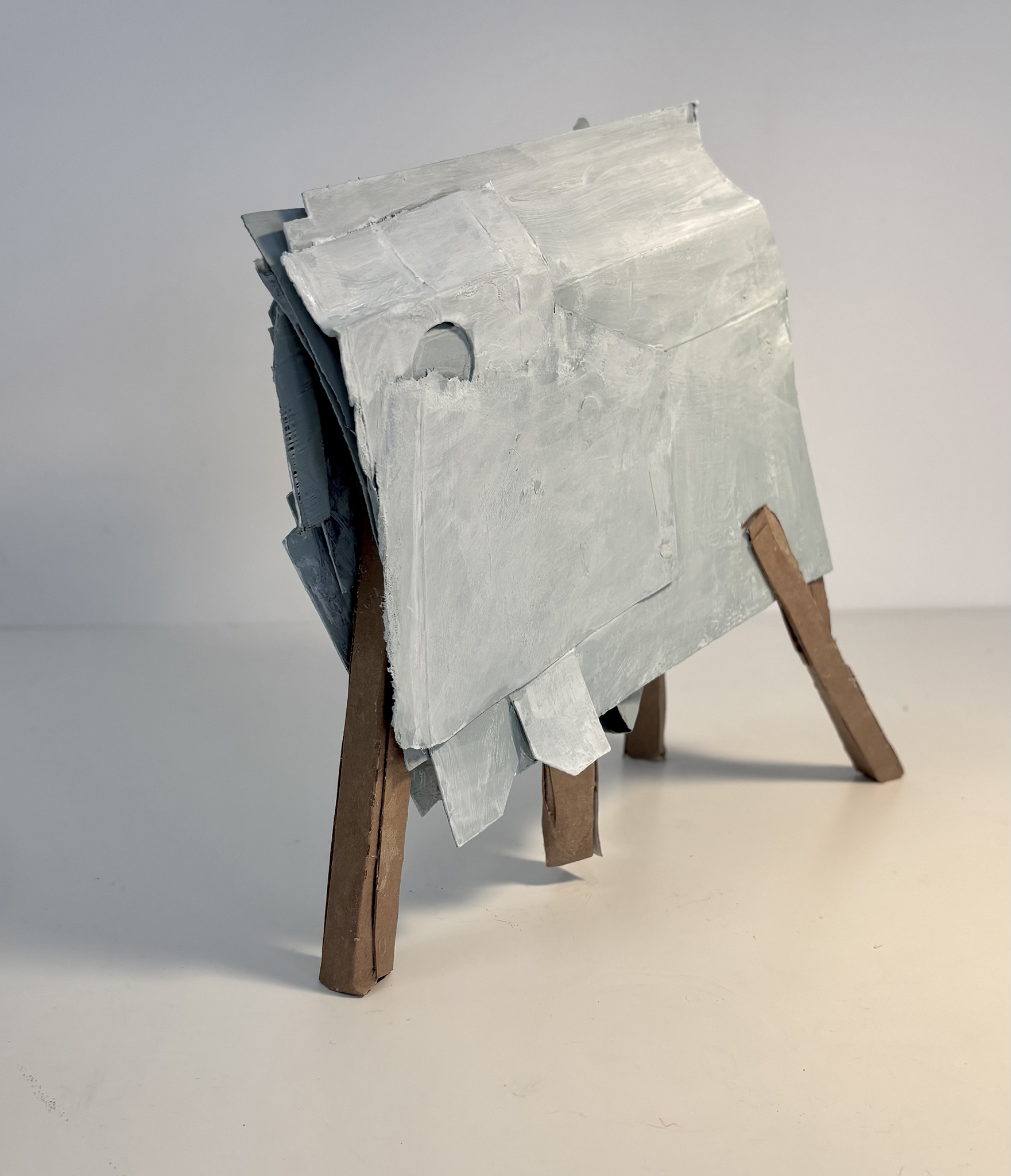
Grouping of two- and three-dimensional works further presented abstracted objects on stilted structures. The constructed objects express the action of chopping, hammering and cleaving to contemplate the context of labourers who eke out a living. Working with the material of breakfast cereal packaging suggested a continuation of the cycle that started with implements used to work the land. The 3-D sketches became animated in their suggested movement and were further developed through mixed media collages and an elongated 3.6-metre painting.
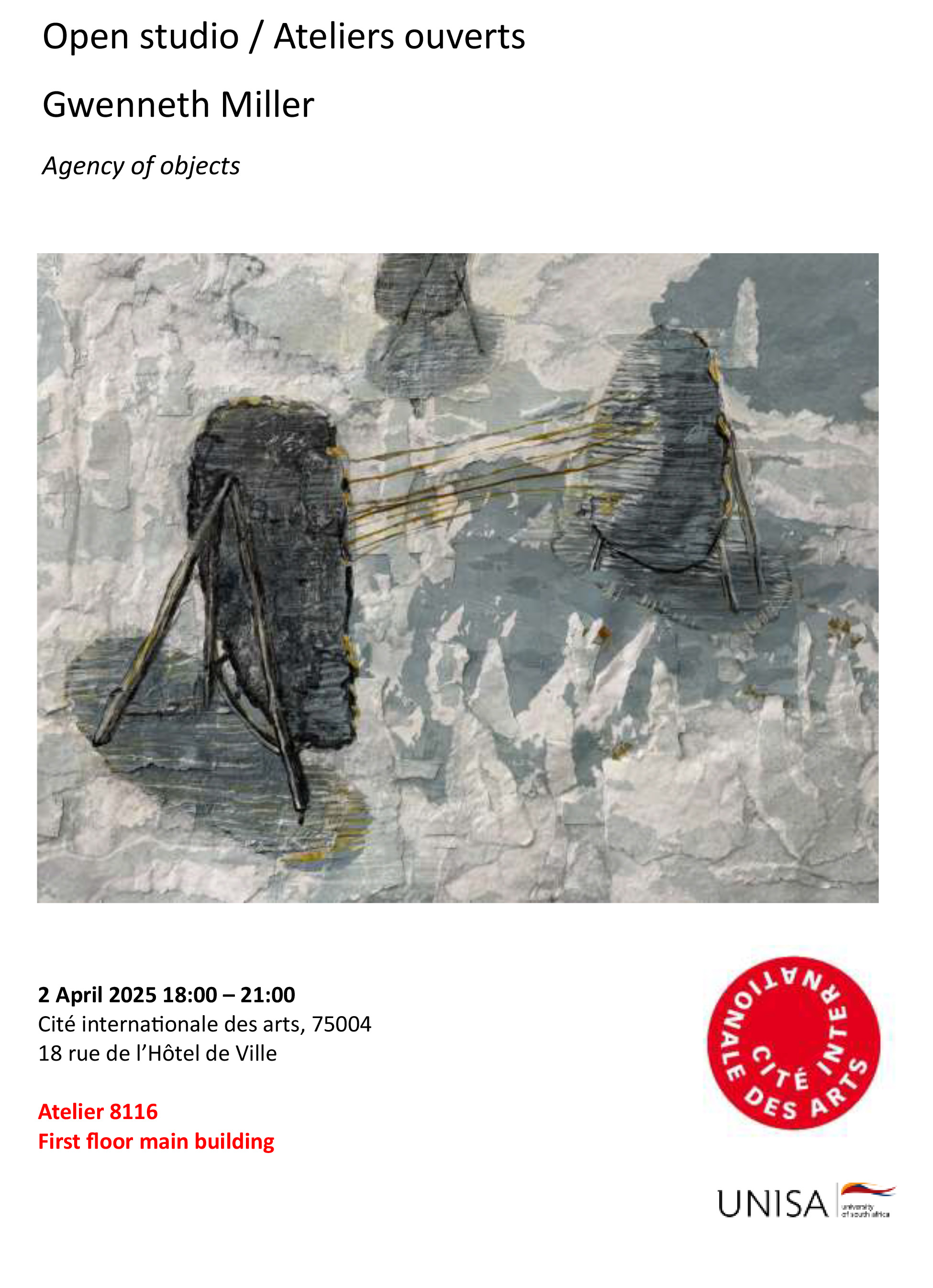
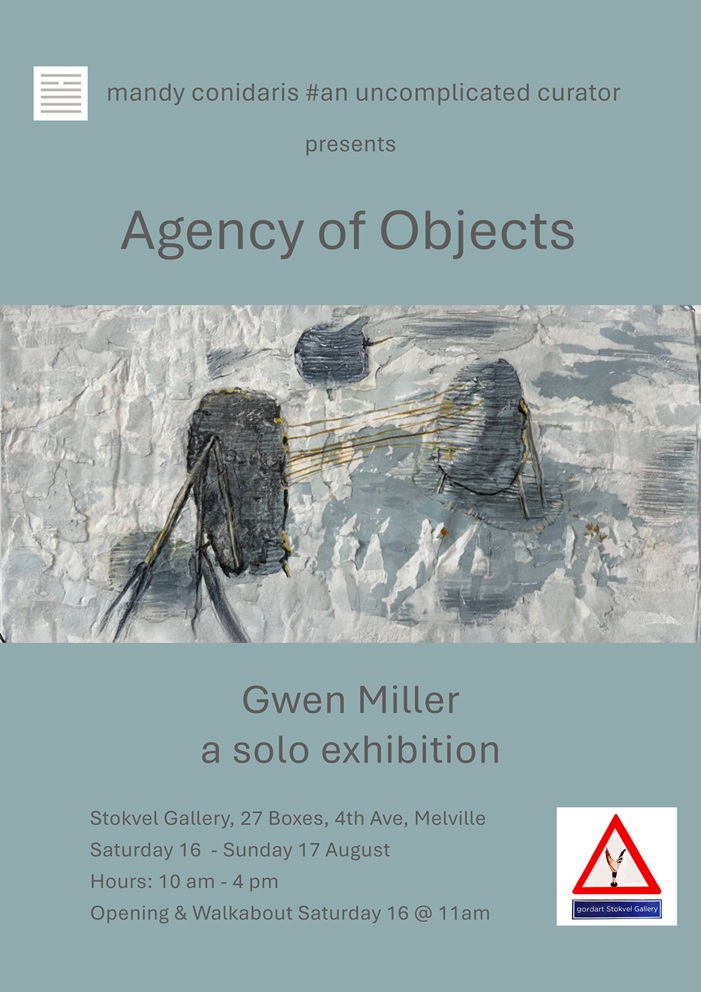
The well-attended exhibition opening of “Agency of Objects” took place at the Cité internationale des arts, Paris (April), and a second rendition of the show was held at Gordart Stokvel Gallery in September 2025, with the addition of several etchings and ink drawings. Stokvel Gallery is in one of Melville Centre's 27 storage containers – a space conceptually extending the theme of transitory nature.
Citation: Gwenneth Miller 2025 Agency of Objects
Description:
For more information see the link to the artist's webpage above: https://www.gwennethmiller.com/agency-of-objects
Files in this item
Name:
Gwenneth Miller ...
Size:
896.7Kb
Format:
JPEG image
Description:
Installation of 12 ...
Name:
Gwenneth Miller ...
Size:
2.930Mb
Format:
JPEG image
Description:
Acrylic on collaged ...
Name:
Gwenneth Miller ...
Size:
3.487Mb
Format:
JPEG image
Description:
Gwenneth Miller, ...
Name:
Gwenneth Miller ...
Size:
2.166Mb
Format:
JPEG image
Description:
Gwenneth Miller, ...
Name:
Gwenneth Miller ...
Size:
2.142Mb
Format:
JPEG image
Description:
Gwenneth Miller, ...
Name:
Gwenneth Miller ...
Size:
1.786Mb
Format:
JPEG image
Description:
Gwenneth Miller ...
Name:
Gwenneth Miller ...
Size:
3.203Mb
Format:
JPEG image
Description:
Gwenneth Miller ...
Name:
Gwenneth Miller ...
Size:
685.9Kb
Format:
JPEG image
Description:
Gwenneth Miller, ...
Name:
Gwenneth Miller ...
Size:
1.323Mb
Format:
JPEG image
Description:
Gwenneth Miller, ...
Name:
Gwenneth Miller ...
Size:
1.075Mb
Format:
JPEG image
Description:
Gwenneth Miller, ...
Name:
Gwenneth Miller ...
Size:
1.447Mb
Format:
JPEG image
Description:
Gwenneth Miller ...
Name:
Gwenneth Miller ...
Size:
2.461Mb
Format:
JPEG image
Description:
Gwenneth Miller, ...
Name:
Gwenneth Miller ...
Size:
1.676Mb
Format:
JPEG image
Description:
Gwenneth Miller, ...
Name:
Gwenneth Miller Dig ...
Size:
1.489Mb
Format:
JPEG image
Description:
Gwenneth Miller, ...
Name:
Gwenneth Miller Axe ...
Size:
1.485Mb
Format:
JPEG image
Description:
Gwenneth Miller, ...
Name:
Gwenneth Miller Axe ...
Size:
1.379Mb
Format:
JPEG image
Description:
Gwenneth Miller, ...
Name:
Gwenneth Miller ...
Size:
1.799Mb
Format:
JPEG image
Description:
Gwenneth Miller, ...
Name:
Gwenneth Miller ...
Size:
1.227Mb
Format:
JPEG image
Description:
Gwenneth Miller, ...
Name:
Gwenneth Miller ...
Size:
5.871Mb
Format:
JPEG image
Description:
Gwenneth Miller, ...
Name:
Gwenneth Miller ...
Size:
3.667Mb
Format:
JPEG image
Description:
Gwenneth Miller ...
Name:
Gwenneth Miller ...
Size:
1.963Mb
Format:
JPEG image
Description:
Gwenneth Miller ...
Name:
Gwenneth Miller ...
Size:
2.160Mb
Format:
JPEG image
Description:
Gwenneth Miller ...
Name:
Gwenneth Miller ...
Size:
2.591Mb
Format:
JPEG image
Description:
Gwenneth Miller ...
Name:
Gwenneth Miller ...
Size:
1.950Mb
Format:
JPEG image
Description:
Gwenneth Miller ...
Name:
Gwenneth Miller To ...
Size:
971.2Kb
Format:
JPEG image
Description:
Gwenneth Miller To ...
Name:
Poster advertising ...
Size:
654.3Kb
Format:
JPEG image
Description:
Poster for Cité ...
Name:
Poster for Agency ...
Size:
159.2Kb
Format:
JPEG image
Description:
Poster for Agency ...
Copyright Statement
Items in UNISA Institutional Repository are protected by copyright, with all rights reserved, unless otherwise indicated. Items may only be viewed and downloaded for private research and study purposes. Please acknowledge publications according to acceptable standards and norms.This item appears in the following Collection(s)
-
Art Exhibitions [24]
Search UnisaIR
Browse
-
All of UnisaIR
-
This Collection