- UnisaIR Home
- →
- Unisa Creative Outputs
- →
- Visual Arts
- →
- Art Exhibitions
- →
- View Item
JavaScript is disabled for your browser. Some features of this site may not work without it.
| dc.contributor.author | Mosako, Daniel Rankadi
|
|
| dc.date.accessioned | 2026-09-18T05:31:25Z | |
| dc.date.available | 2026-09-18T05:31:25Z | |
| dc.date.issued | 2023-06-07 | |
| dc.identifier.citation | https://www.unisa.ac.za/sites/corporate/default/Colleges/Human-Sciences/Schools,-departments,-centres,-institutes-&-units/School-of-Arts/Department-of-Art-and-Music/News/Unisa-Art-Gallery-presents-exhibition-celebrating-the-universitys-rich-heritage | en_US |
| dc.identifier.uri | https://ir.unisa.ac.za/handle/10500/33055 | |
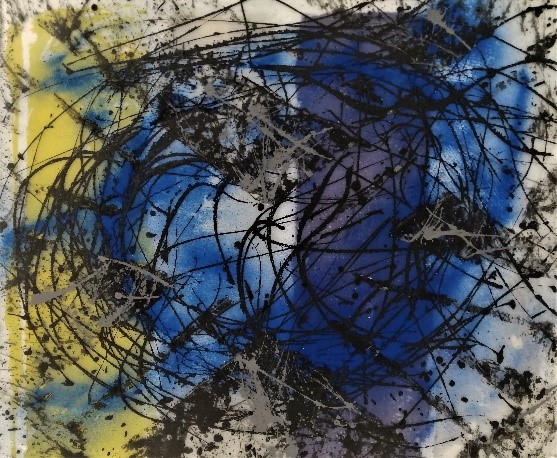
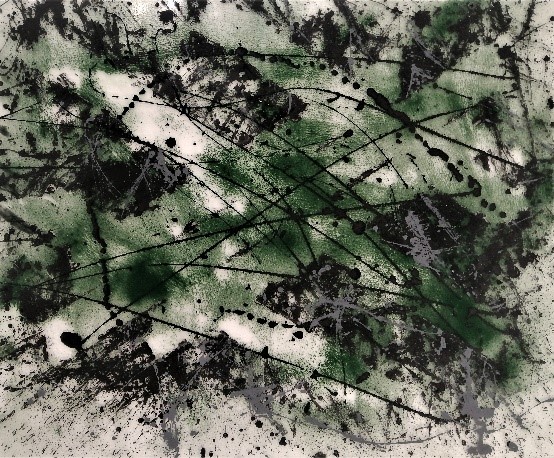
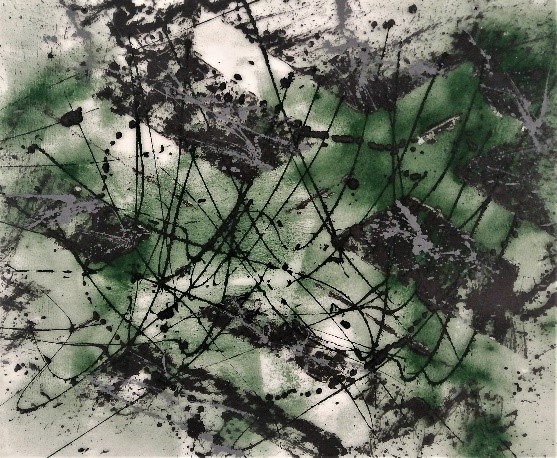
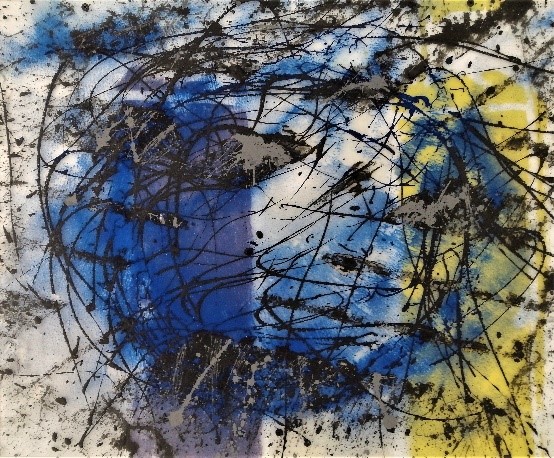
| dc.description | Swings is an abstract expressionist artwork that explores the shifting landscape of human emotions. Inspired by the rhythmic motion of a swing, the work reflects the constant movement between emotional highs and lows, joy and sadness, certainty and doubt. Through dynamic forms, movement, and colour, it visualises the fluid and unpredictable nature of our inner emotional world. Drawing on contemporary theories of emotion and embodied expression, Swings presents feelings as evolving experiences rather than fixed states. The artwork invites viewers to reflect on their own emotional journeys, reminding us that emotional fluctuation is a natural and essential part of being human. Ultimately, Swings celebrates the complexity, vulnerability, and resilience that emerge as we navigate life's continuous emotional transitions. | en_US |
| dc.description.abstract | Swings invites viewers into a profound exploration of the ever-changing terrain of human emotions. Executed in an abstract expressionist style, the artwork serves as a visual metaphor for the psychological oscillations that define our inner lives. Much like a swing moving rhythmically between opposing points, human emotions rarely remain fixed. We move continuously between hope and doubt, joy and sorrow, confidence and vulnerability. The artwork captures these subtle and dramatic shifts, revealing the fluid, often unpredictable nature of emotional experience. At first glance, the imagery may evoke memories of childhood, freedom, and playfulness. Many of us associate swings with moments of innocence and delight, suspended briefly between earth and sky. Yet beneath this familiar and nostalgic symbolism lies a deeper reflection on the emotional journey of adulthood. As we grow, our lives become marked by emotional transitions that are far more complex: moments of exhilaration can suddenly give way to uncertainty; feelings of belonging may coexist with loneliness; excitement may be tempered by fear. Swings transforms these internal contradictions into a dynamic visual language, encouraging viewers to recognise the emotional movements that accompany the human condition. Central to the work is the understanding that emotions are not isolated events but interconnected states that continually evolve. Human beings experience feelings as a spectrum rather than as fixed categories. One moment we feel energised and optimistic, the next reflective and withdrawn. These emotional fluctuations are represented through movement, colour, texture, and form, creating a visual environment that mirrors the constant reshaping of our psychological world. The conceptual foundation of Swings draws on contemporary theories of emotion, particularly Russell's Circumplex Model of Affect. This theory suggests that emotions exist along two intersecting dimensions: valence, which measures how pleasant or unpleasant an emotion feels, and arousal, which reflects the level of energy or activation associated with that feeling. Rather than viewing emotions as separate entities, the model portrays them as points within a continuous emotional space. Swings translates this concept into artistic expression, visualising the gentle and sometimes abrupt transitions that occur as individuals move through different emotional states. The artwork also engages with theories of embodied emotion, which recognise the close relationship between physical movement and emotional experience. According to movement theorists such as Rudolf Laban, the quality of our movements often reflects our feelings. Heavy movements may express emotional burden, while light and expansive gestures may convey joy, anticipation, or liberation. The swinging motion embedded within the artwork becomes a powerful metaphor for this relationship, transforming physical movement into a visible representation of internal emotional change. The development of Swings embraces exploration and interactivity as part of its creative process. Rather than presenting emotion as a static image, the work acknowledges that emotional states are continually influenced by personal experience, bodily sensation, and environmental interaction. Through responsive elements that may incorporate movement, participation, or sensory engagement, the artwork encourages viewers to become conscious of their own emotional rhythms. In doing so, the work shifts from being merely observed to being experienced. Colour plays a significant role in communicating emotional transitions. Vibrant reds and oranges may suggest intensity, passion, or emotional urgency, while cooler blues evoke introspection, melancholy, or calm contemplation. Greens may represent balance, healing, and renewal. As colours merge, dissolve, and re-emerge, they reflect the reality that emotions are rarely pure or singular. Human feelings often overlap, creating complex emotional states that resist simple definition. Experiencing Swings is therefore an invitation to engage with the cyclical nature of emotion itself. The repetitive back-and-forth movement embodies the psychological patterns through which individuals navigate life. Emotions rise and fall, return and recede, often in ways that feel both familiar and unexpected. The artwork reminds us that emotional fluctuation is not a sign of instability but an essential aspect of being human. What makes Swings particularly compelling is its ability to render invisible emotional processes visible. Rather than depicting a single emotional moment, it captures emotion as an ongoing journey, one characterised by movement, transformation, and continual negotiation between opposing states. In this sense, the work functions as a mirror, reflecting not merely feelings themselves but the complex ways in which individuals experience, manage, and embody them. Ultimately, Swings is a celebration of emotional complexity and resilience. It encourages viewers to embrace the inevitable shifts between certainty and uncertainty, pleasure and pain, calm and turbulence. Like a swing that gains momentum through movement, human growth often emerges through emotional change. By transforming inner emotional fluctuations into a tangible sensory experience, Swings offers both a poetic and deeply human meditation on what it means to feel, adapt, and exist within the ever-changing landscape of emotion. | en_US |
| dc.publisher | Unisa Art Gallry | en_US |
| dc.subject | Swing, Pendular movements To-and-fro motions Rhythmic sways Fluctuations | en_US |
| dc.title | Swing | en_US |
| dc.type | Image | en_US |
Files in this item
This item appears in the following Collection(s)
-
Art Exhibitions [24]