- UnisaIR Home
- →
- Unisa Creative Outputs
- →
- Visual Arts
- →
- Art Exhibitions
- →
- View Item
JavaScript is disabled for your browser. Some features of this site may not work without it.
| dc.contributor.author | Miller, Gwenneth
|
|
| dc.date.accessioned | 2026-02-16T20:08:56Z | |
| dc.date.available | 2026-02-16T20:08:56Z | |
| dc.date.issued | 2024-09-14 | |
| dc.identifier.citation | Gwenneth Miller 2024 The measure of Matter exhibition | en_US |
| dc.identifier.uri | https://ir.unisa.ac.za/handle/10500/32158 | |
| dc.description | See the link to the artist's website at the top of this page | en_US |
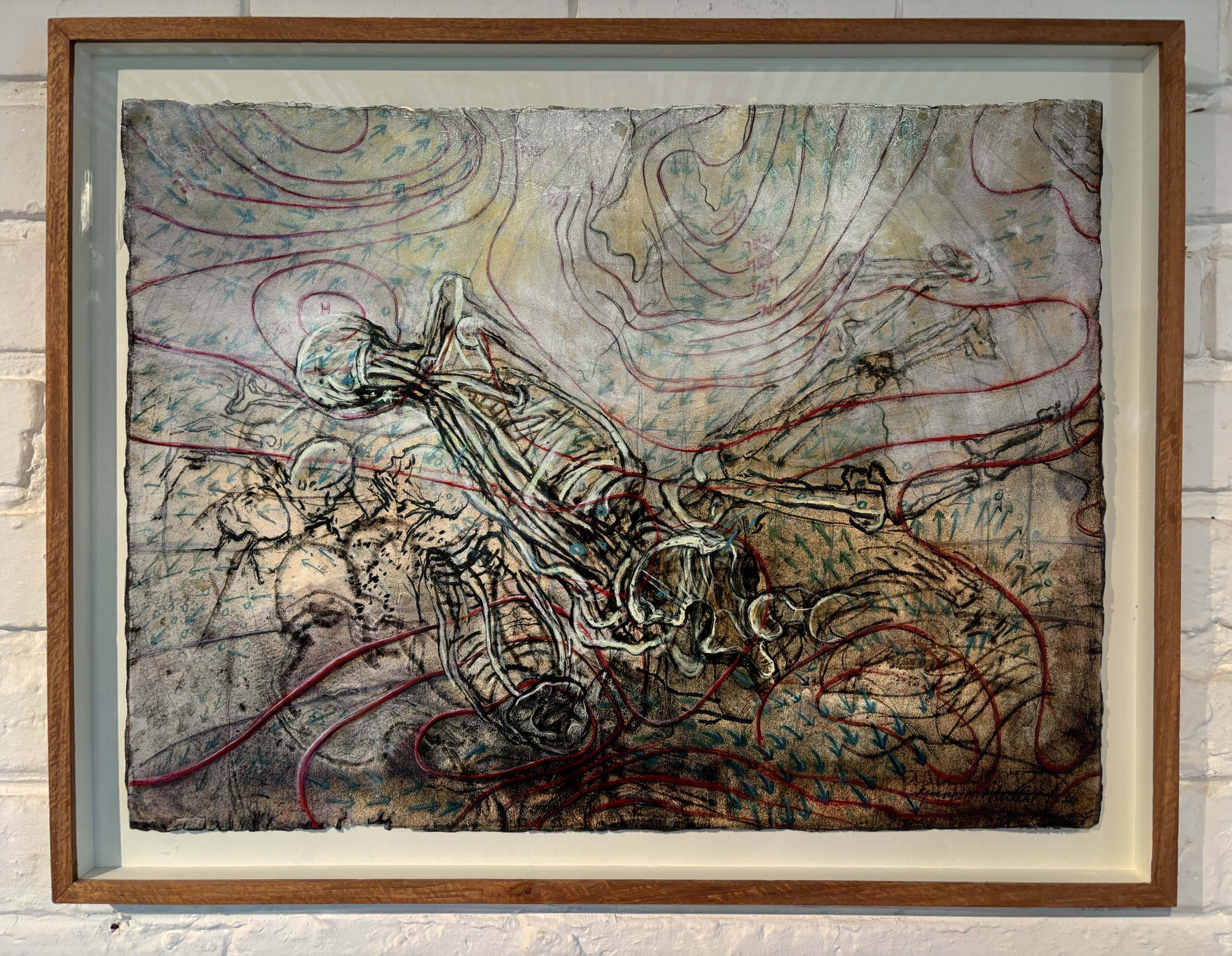
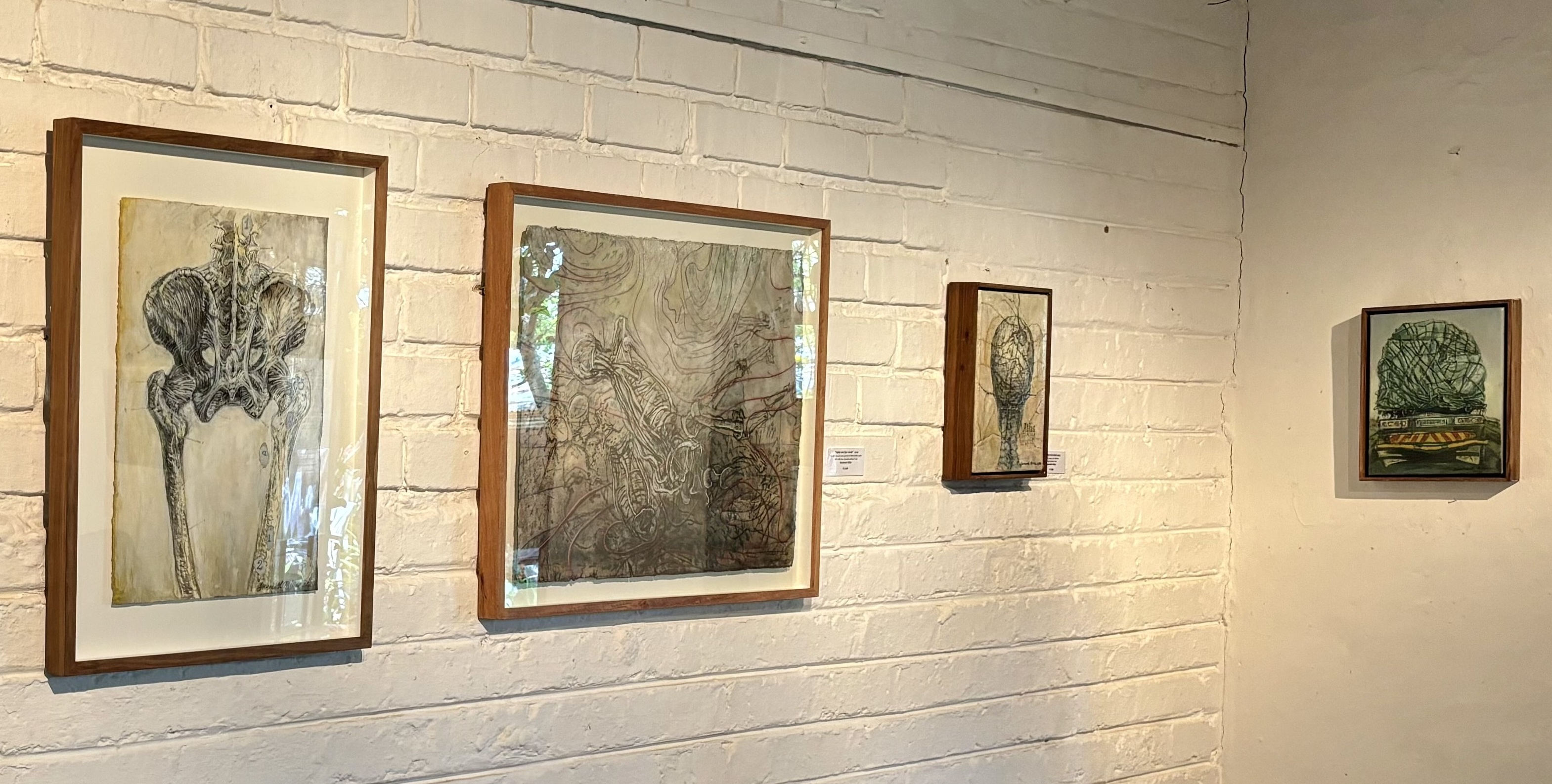
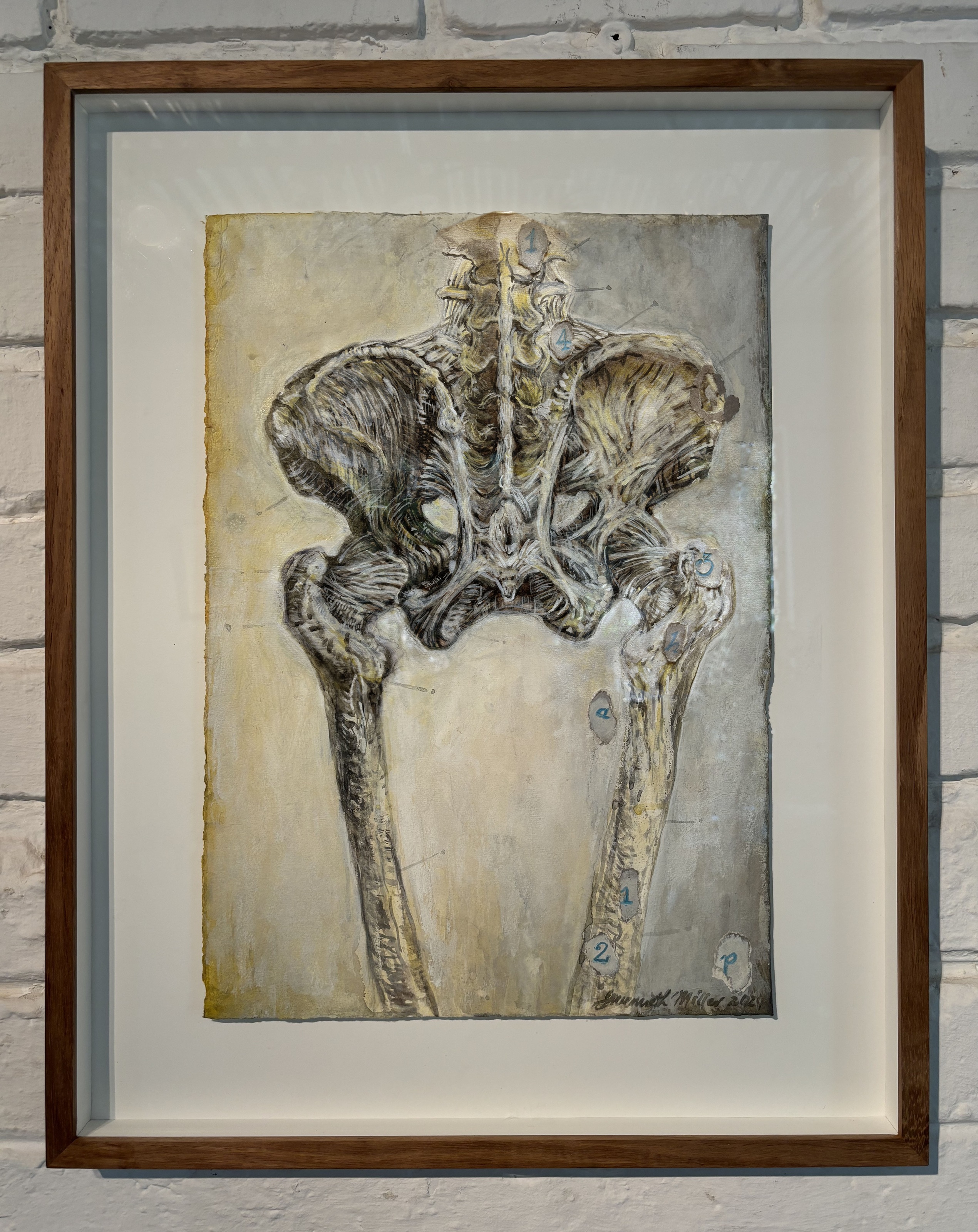
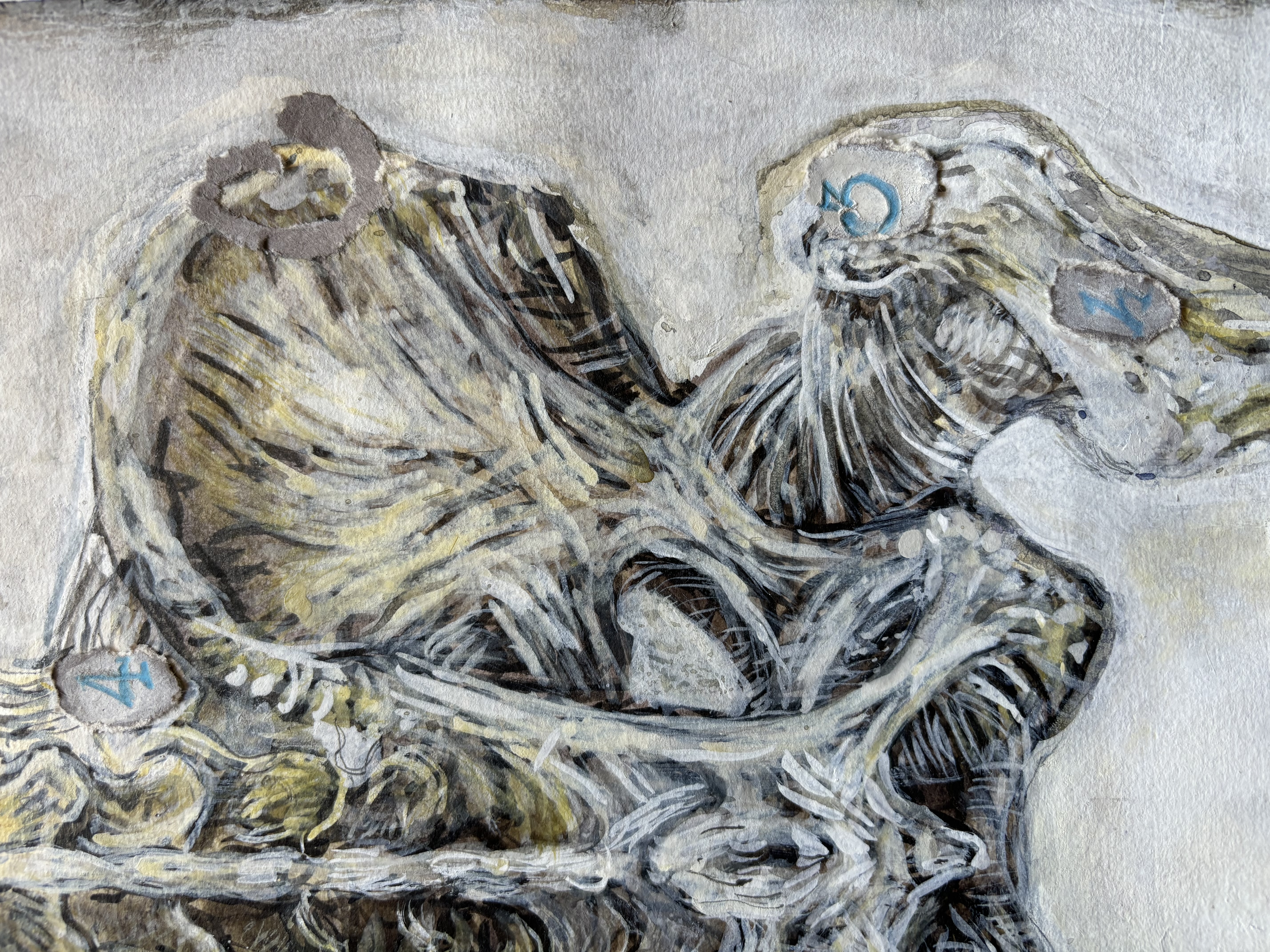
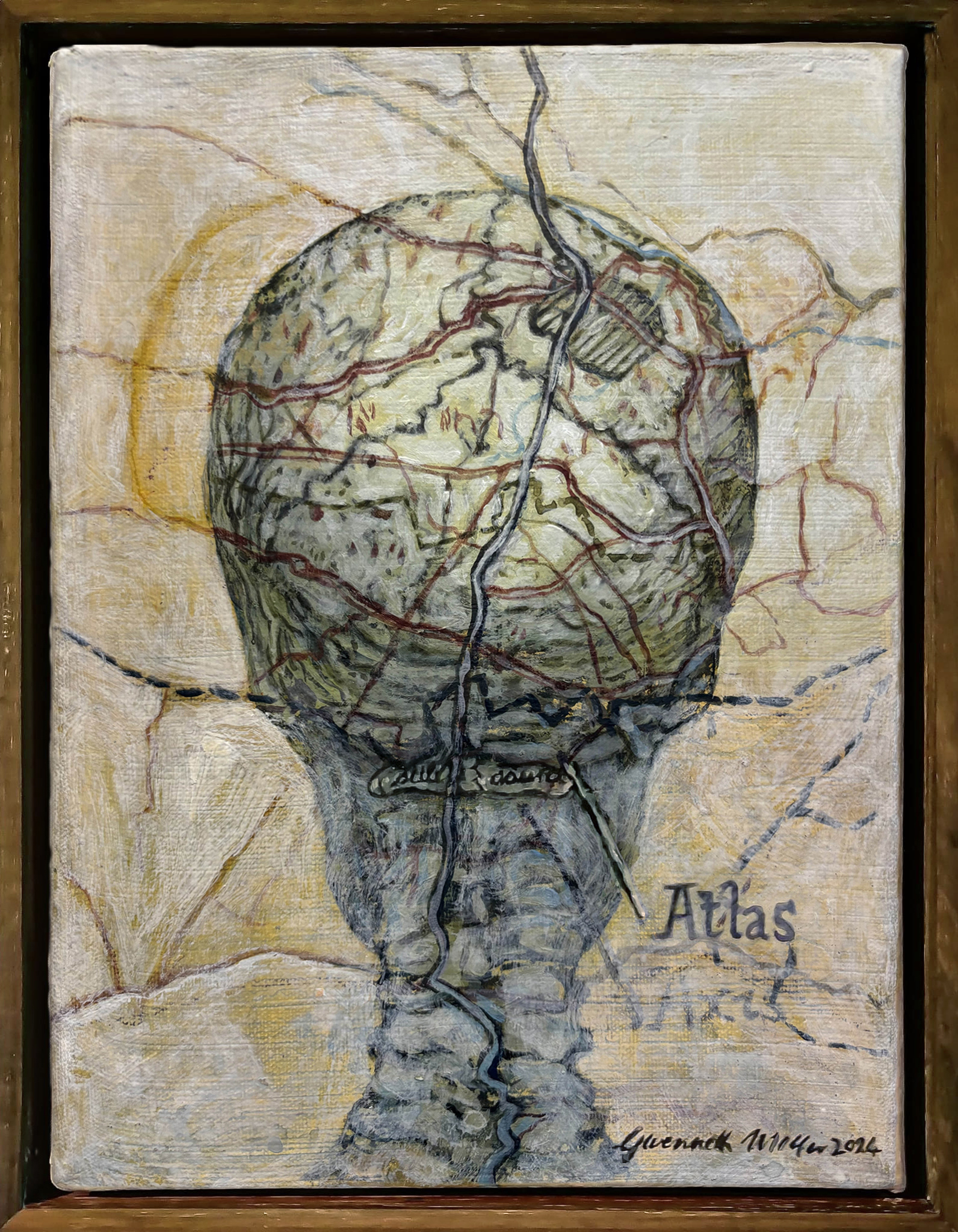
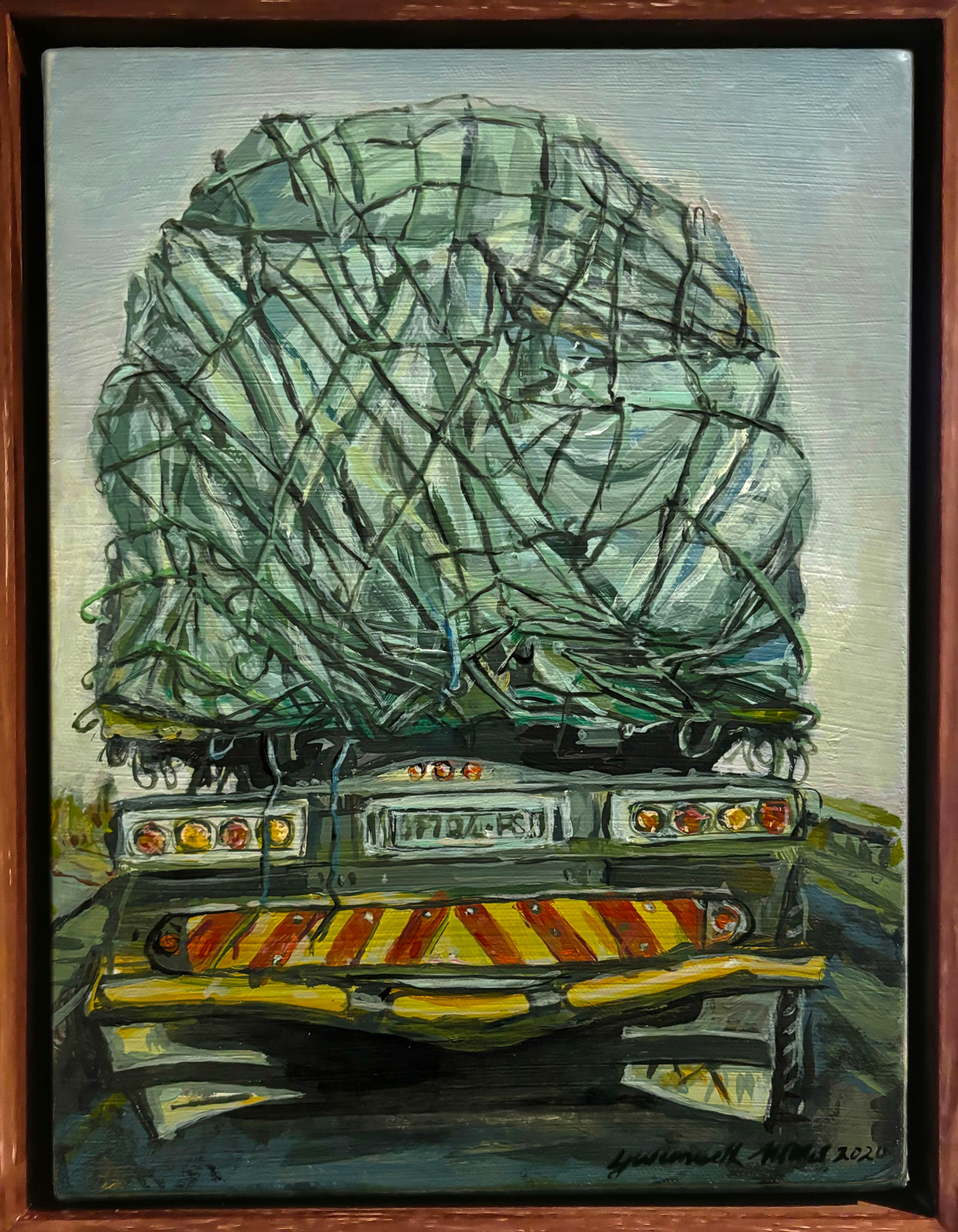
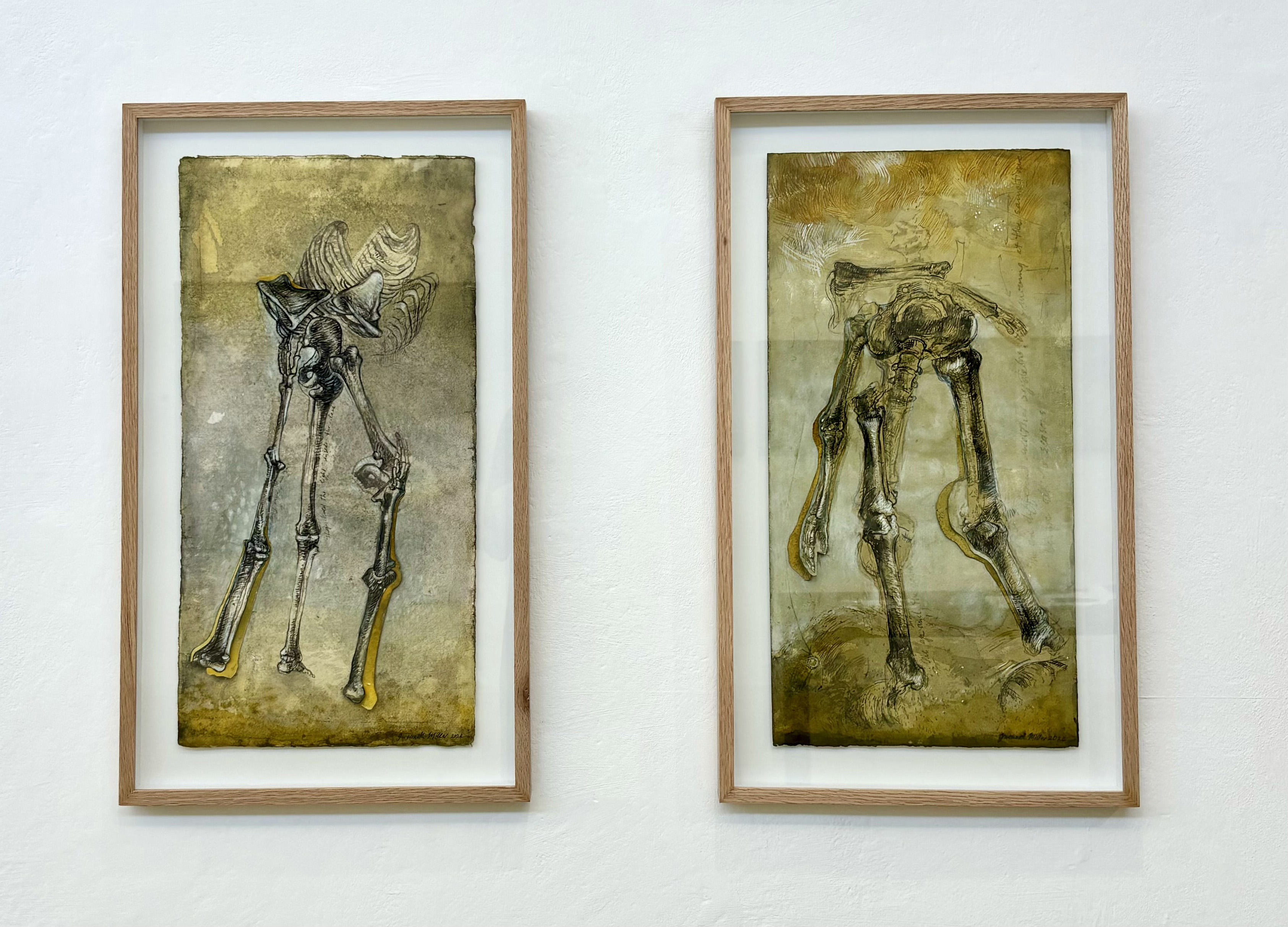
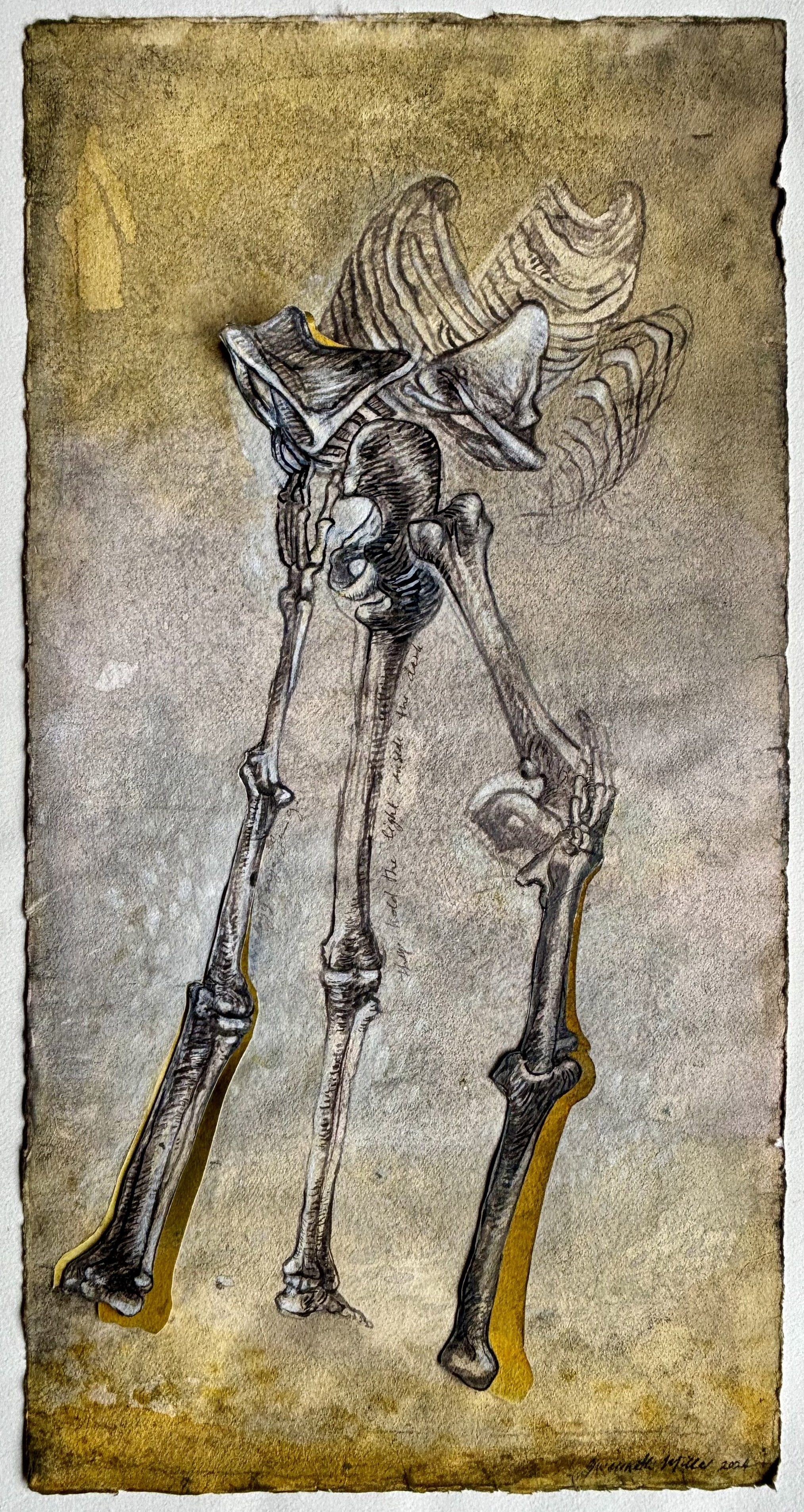
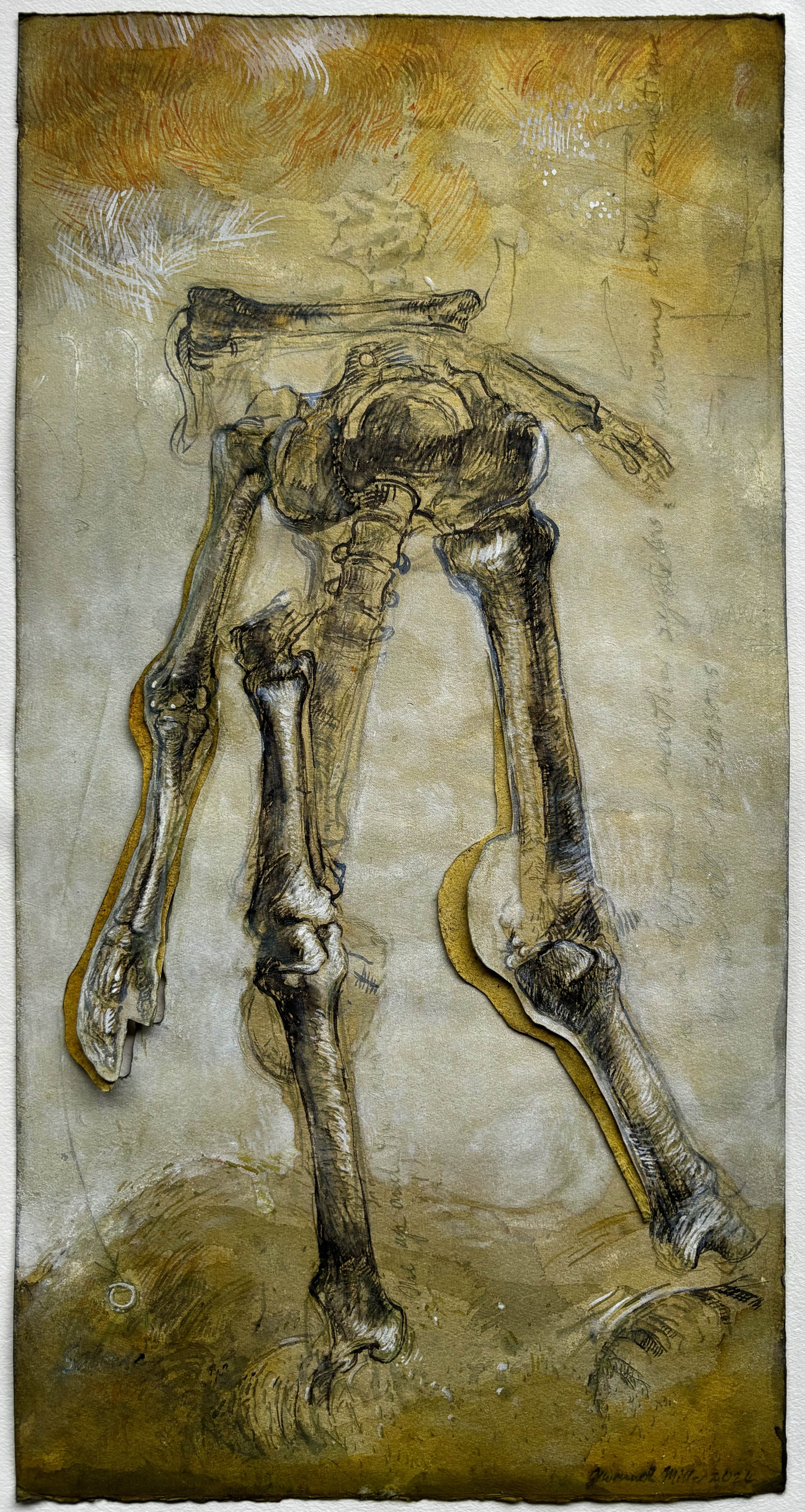
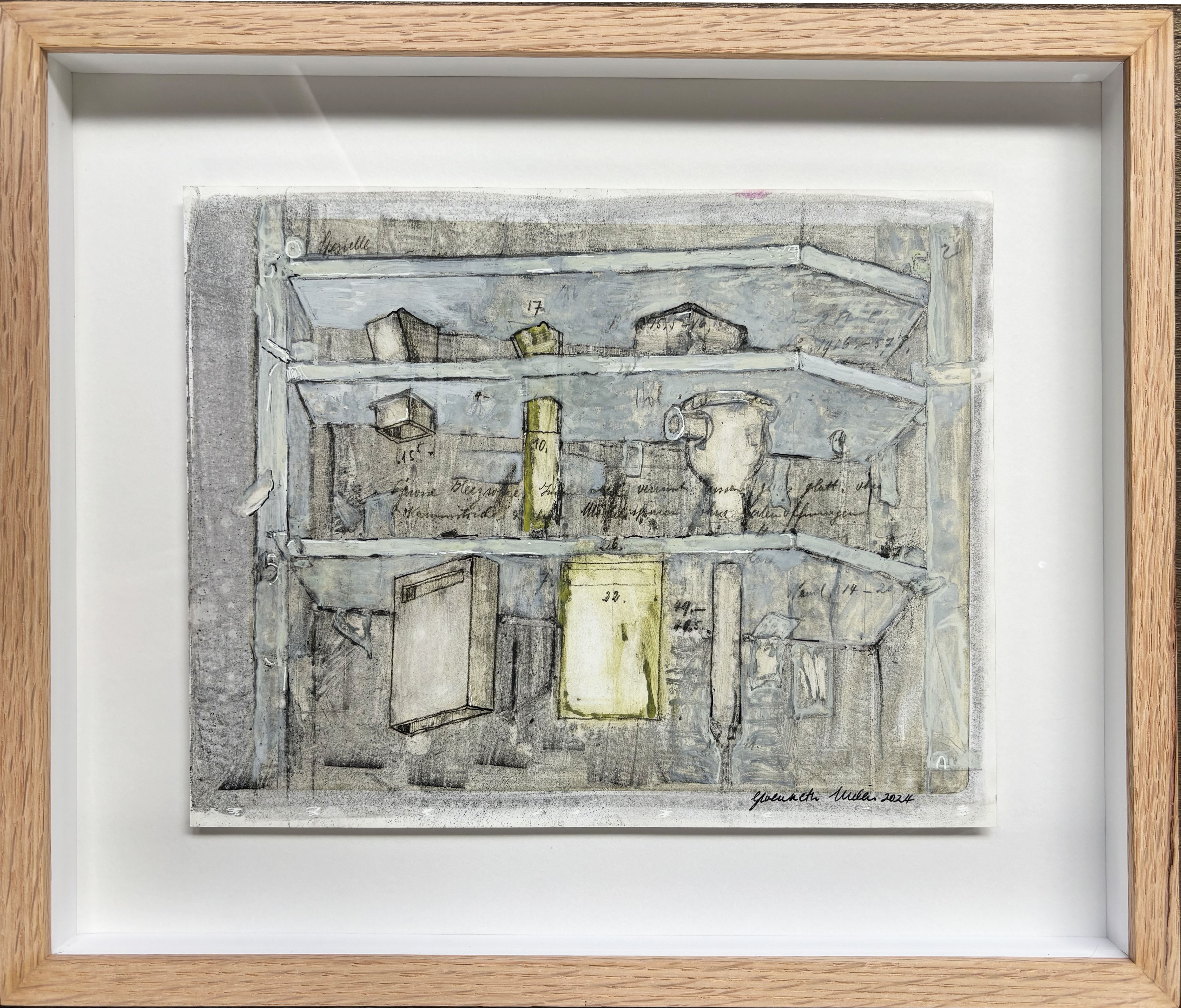
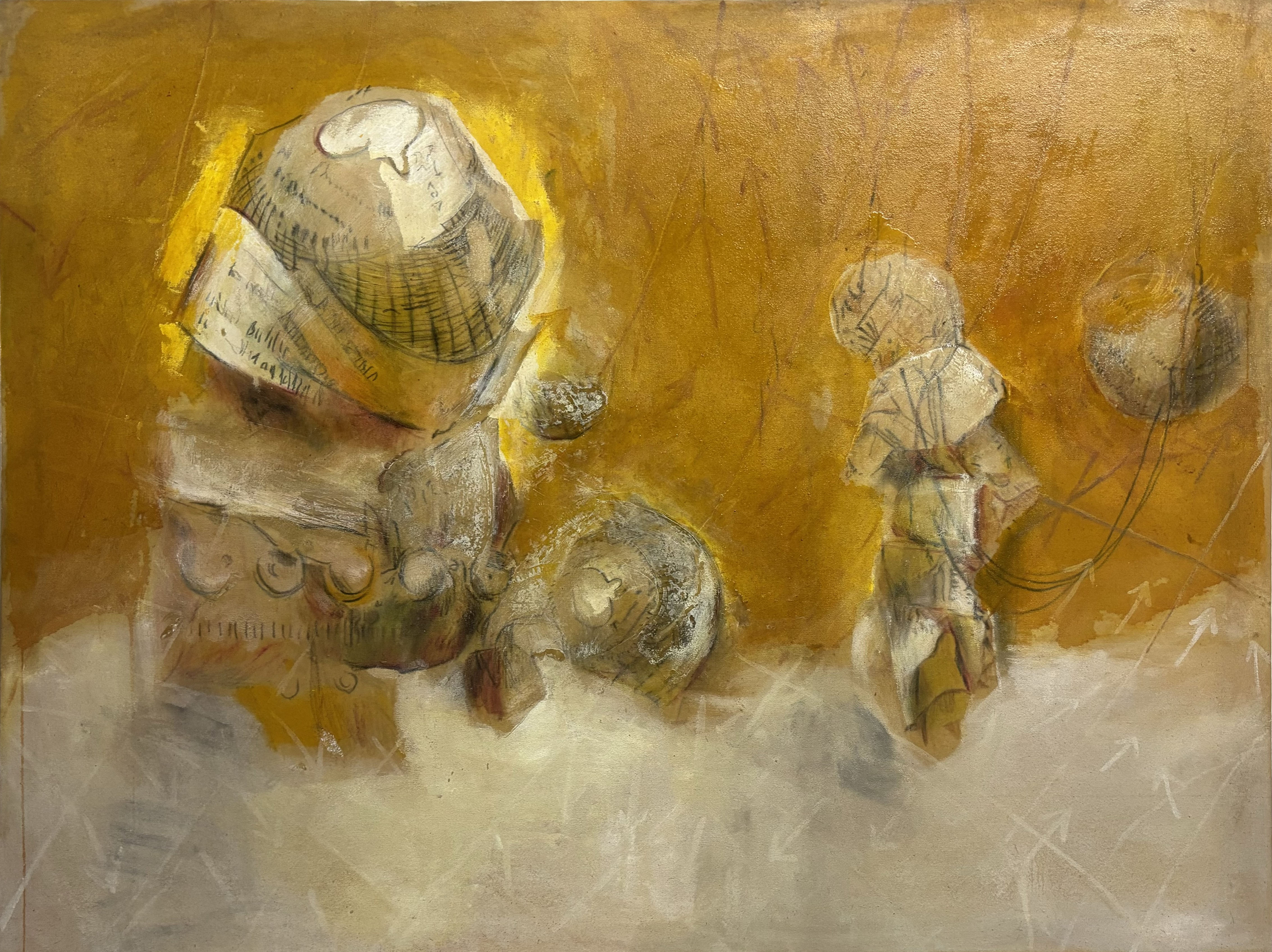
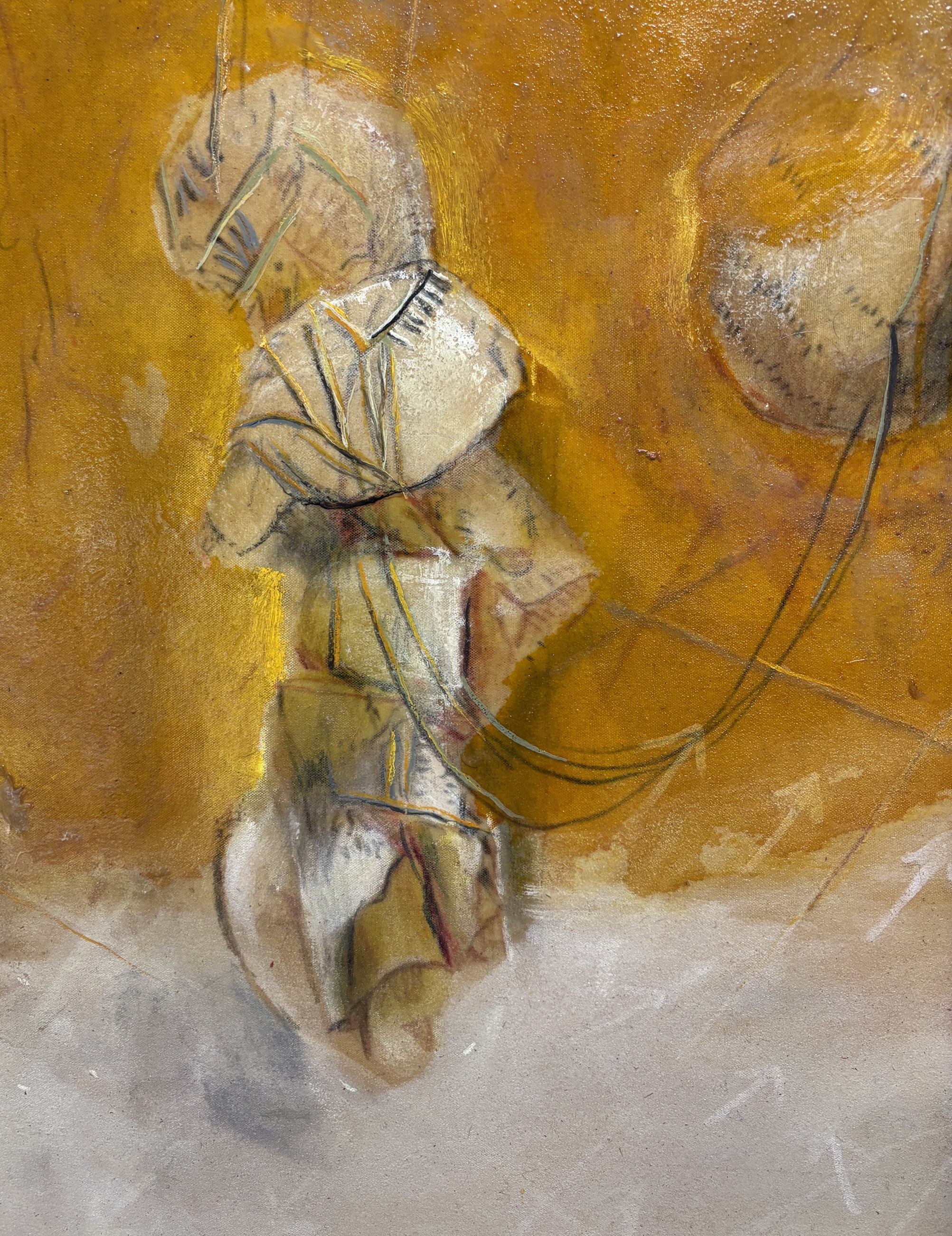
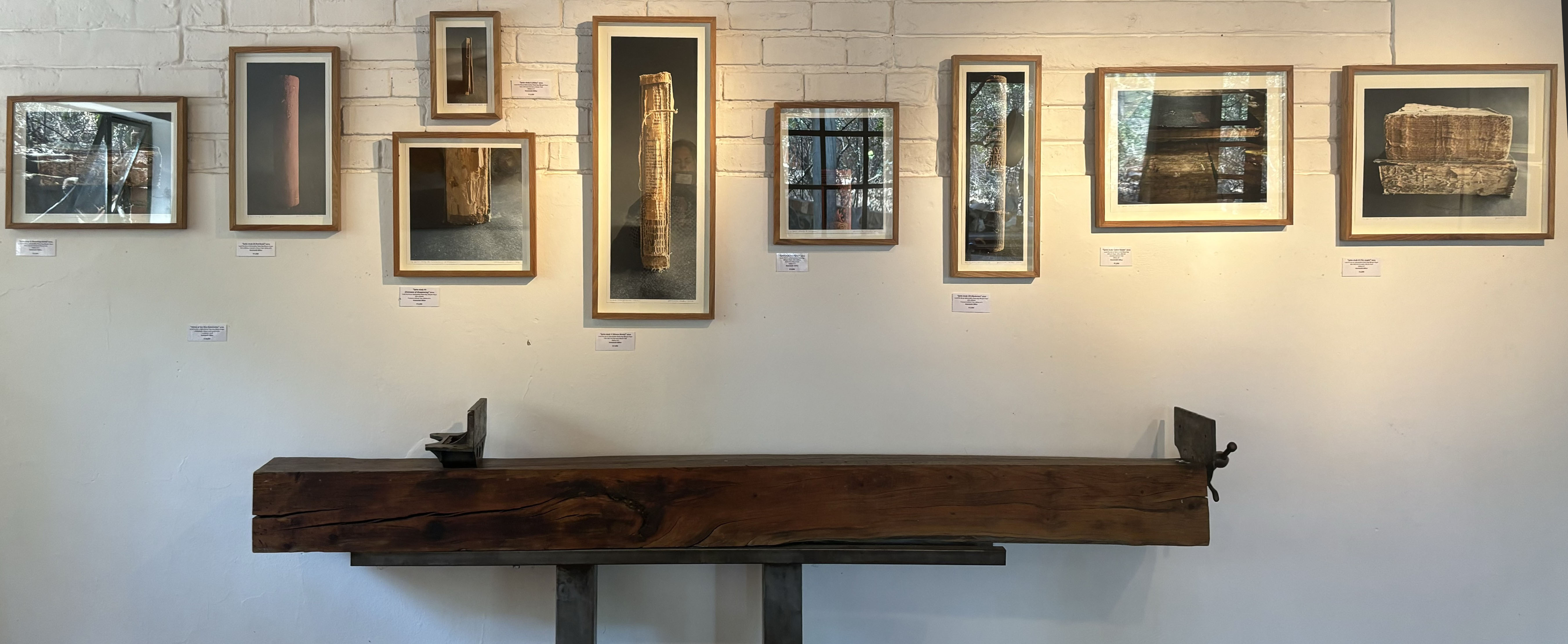
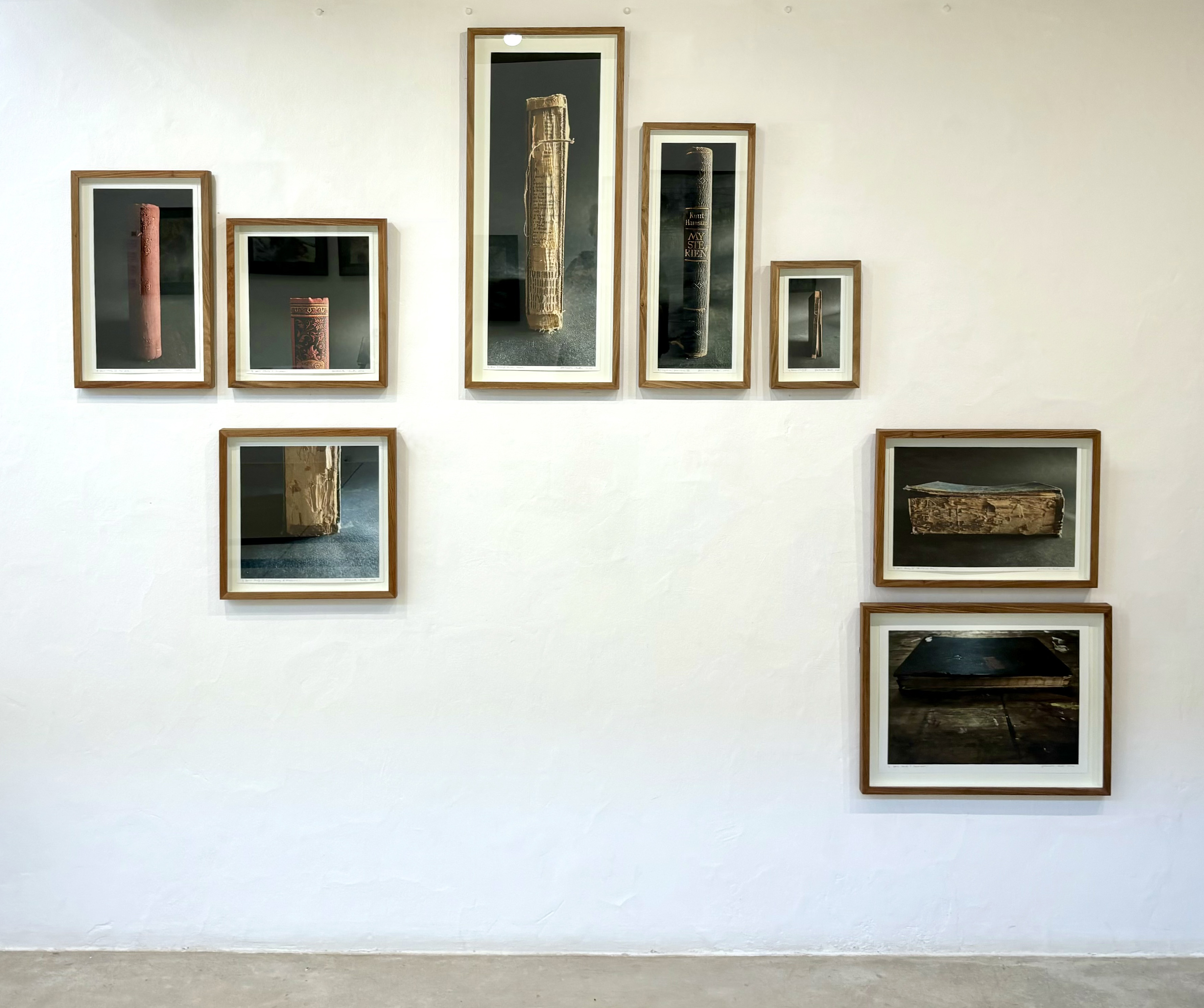
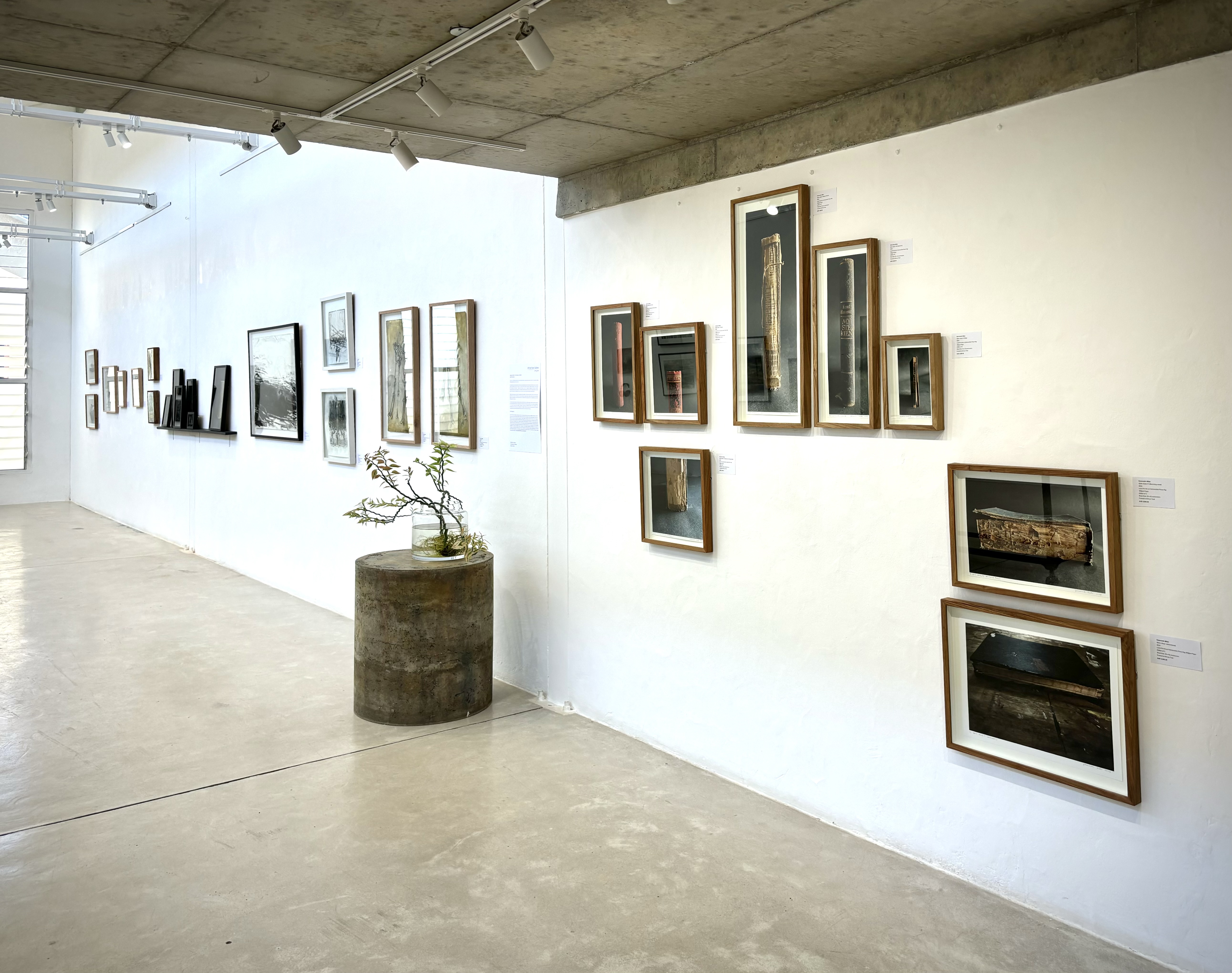
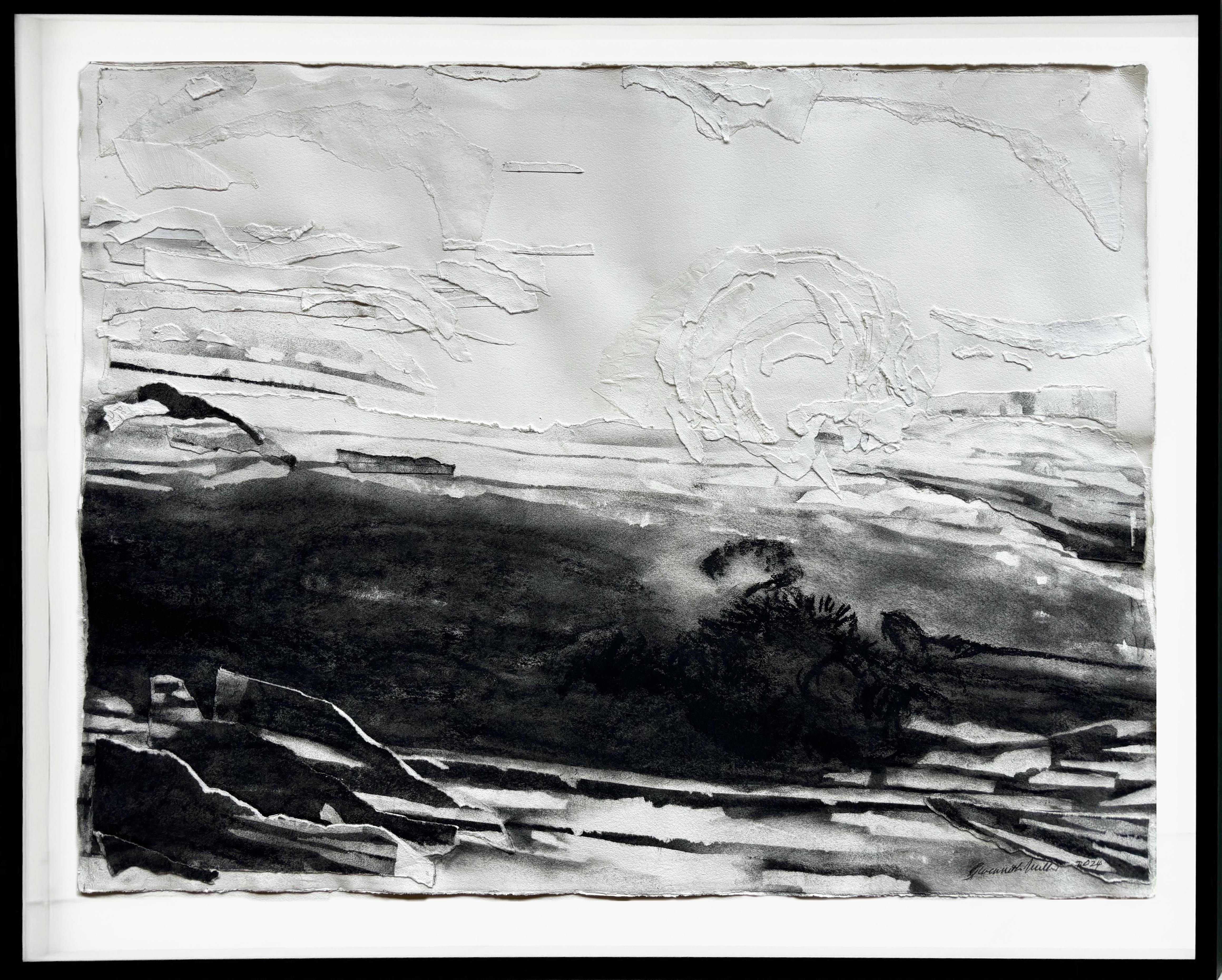
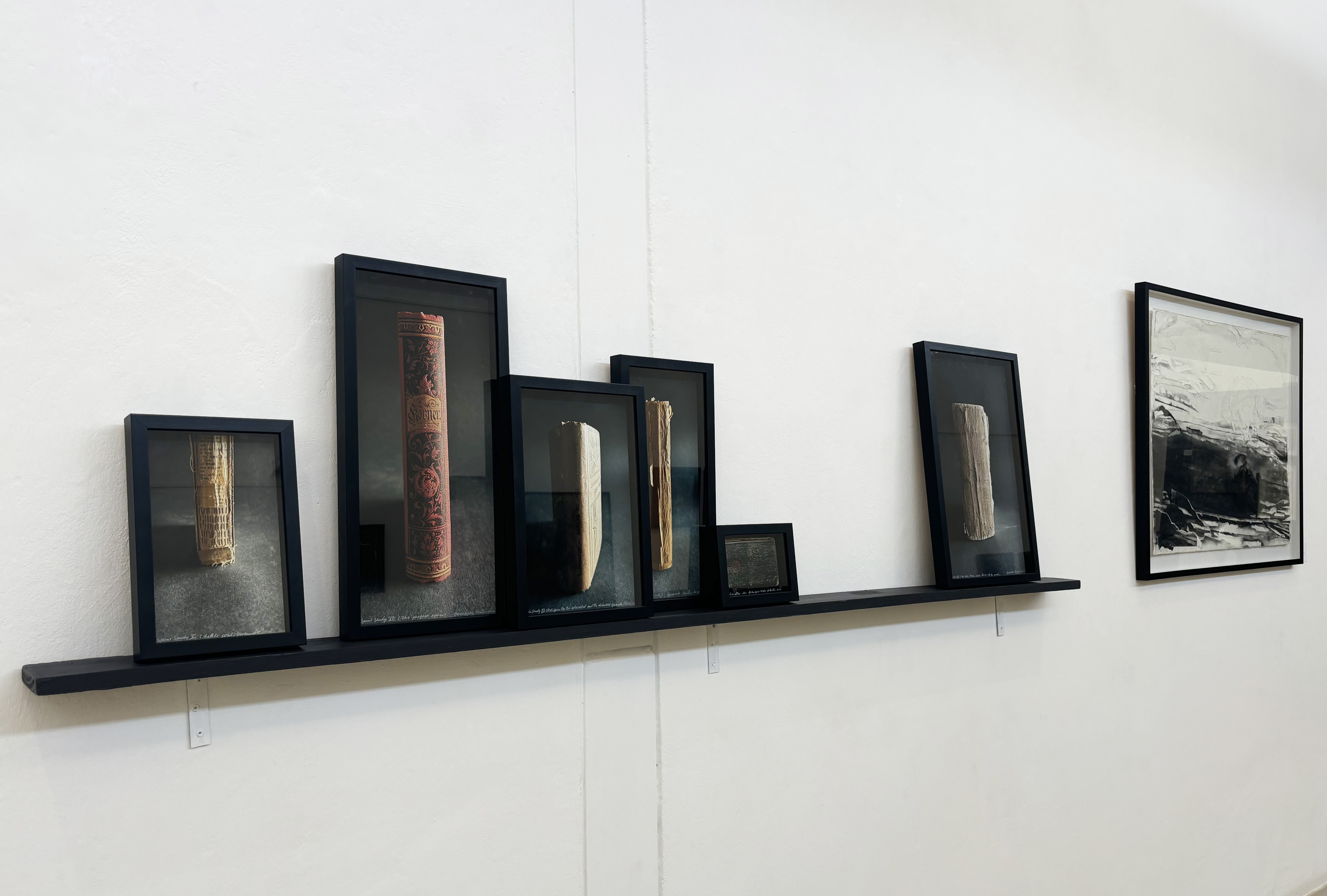
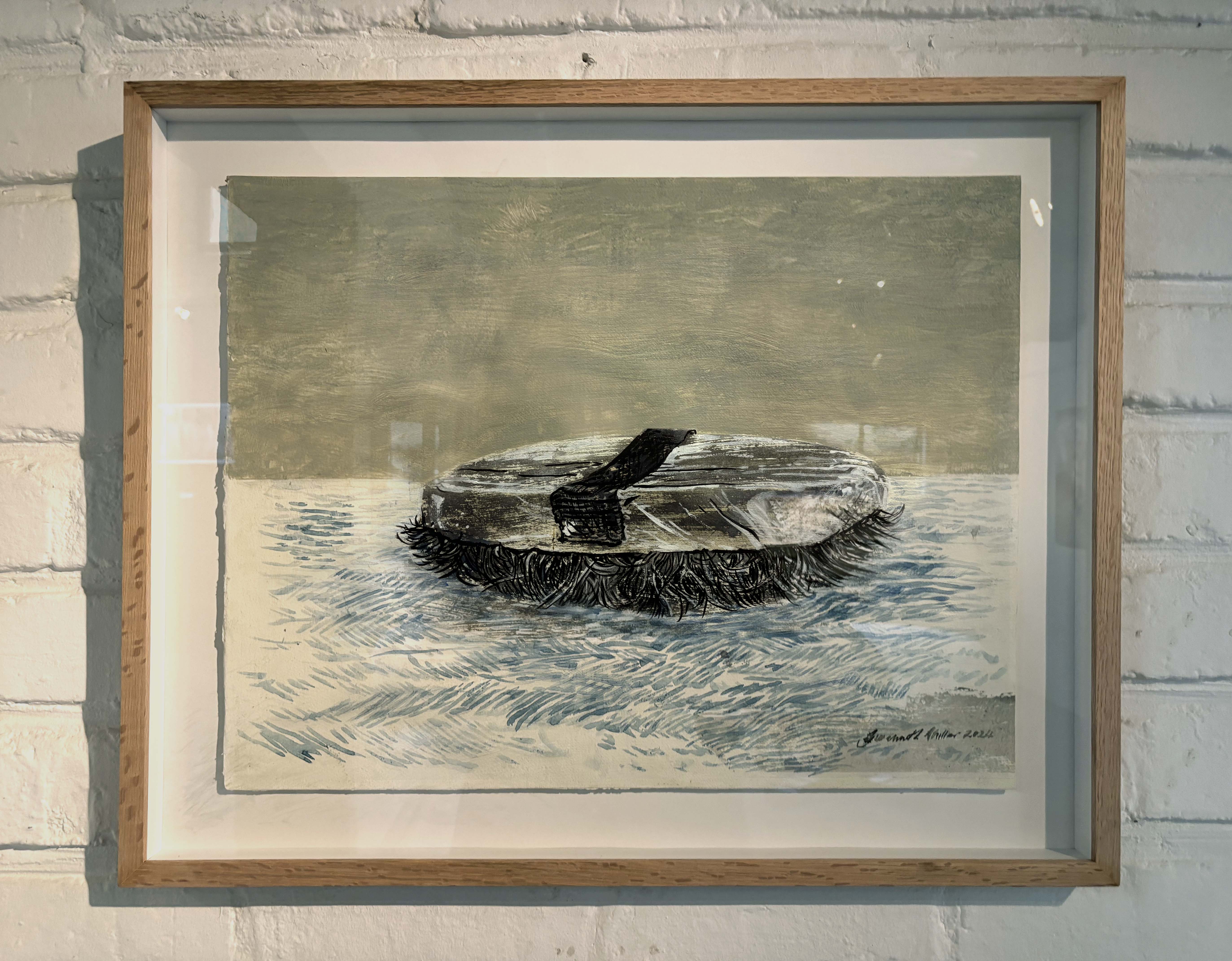
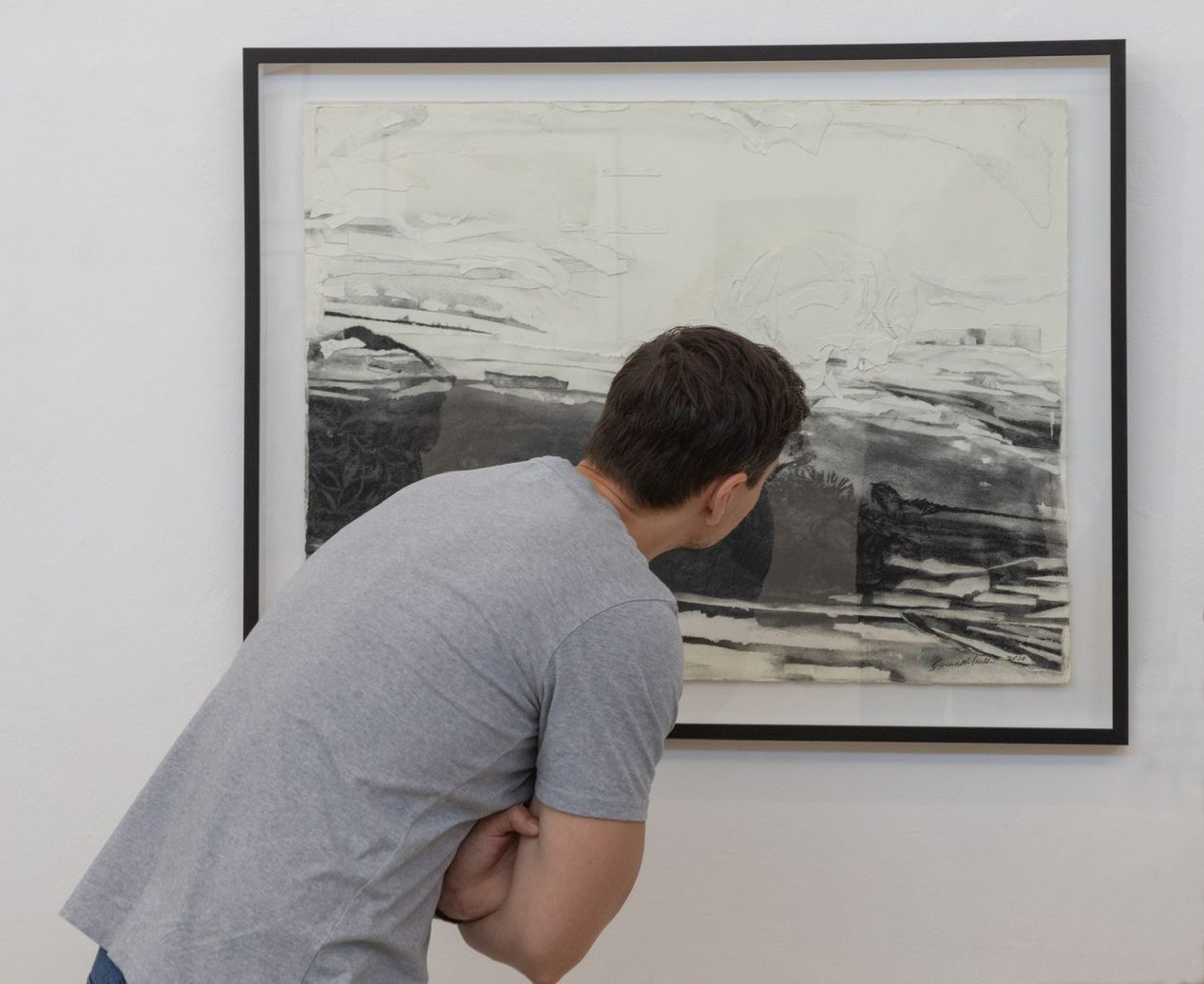
| dc.description.abstract | The travelling solo exhibition “The Measure of Matter” consists of 21 new works reimagining spines and objects to consider being bound by time and matter. The first installation was in the two front rooms of the Tina Skukan Gallery and the second installation took place at the White River Art Gallery, where the narrative flow was reconceptualised. The research was triggered by the physical problem of struggling to walk due to Spondylitis. In the months before the pending operation, the artist studied the anatomy and contemplated frailty. Images of the skeleton and the spine transmuted into an interest in the spines of old books, existential mapping devices and objects associated with mortality and the interrogation of what really matters. The artworks address a shared reality: we are all bound by time and matter and the anxieties of an uncertain future. The preliminary research considered how the artist could extend personal experiences into works that would resonate with the audience, bringing its own history and realities to the exhibition. The painting “Platteland” was a reworking of the brush art created the previous year, but here the artist added water to suggest a journey of the object as ‘body’ on the way elsewhere. It was the work that triggered the association and link with weathered bones. Drawing the past into the present, alchemic yellow tones were applied in works such as “Map to nowhere (becoming something)" and the darkly humorous dancing “Salome I” and “Salome II”. Interestingly, the Biblical Salome is vilified by Jung in his Red Book (2009), although he equates her with the soul. Initially anatomy was approached as a mechanistic system of levels until the body’s incredible ability to grow new bone was experienced, restructuring the old into something new. Bridgman’s (1972) “The human machine” introduced the artist to the atlas bone that supports the human skull. It is named after the titan Atlas, who, in Greek mythology, supported the world on his shoulders. The painting "Atlas" was accompanied by “Load Bearing", depicting an overloaded truck – begging the question of burden – albeit with some sense of humour. Bridgman’s images of the human spine reminded of weathered books kept intact by a network of stubborn threads, like tendons binding muscle and bone. These inspired the creation of “All that matters” and “The spine study” series. At Skukan Art Gallery, the series was positioned to form a dialogue with the permanent sculptural works that related to objects of labour, but the installation was reformatted and retitled at White River Art Gallery, to “A library of time from Göttingen”, as the space seemed to demand a different reading. In high-resolution photography the books were treated as if they were portraits, commemorating time with subtitles such as “Becoming wood” and “Dictionary of the disappearing”. Conceptually, weather mapping was considered to contemplate fresh winds blowing life into matter. The chronicle flow was a method to renew thinking about illness as a cyclical part of life. Visual associations were layered until the medium and material began to communicate meaningful new associations. Torn layers of paper and thickly applied charcoal evidenced awareness as embodied thinking. Much like the atlas bone, our spiritual compass decides what matters and what does not, and how we measure its bearing and influence. These works form an interdisciplinary conversation with reflections on psychology, new-material culture and research on ‘falling upwards' in life, to borrow Richard Rohr’s words. In this sense the work contributes to new understanding, bridging the above fields in visualisation. “The Measure of Matter” exhibitions and several walkabouts were well attended at both Tina Skukan Gallery and White River Art Gallery. Opportunities for academic talks were optimised as the audience attended the solo and the solo of Elfriede Dreyer, which were presented alongside each other but as separate research. Both spaces have a good following and are well-established institutions. Bridgman, GB. 1972. The human machine. New York: Dover. Jung, CG. 2009. The Red Book: Liber Novus. Edited by S. Shamdasani. New York: Norton. | en_US |
| dc.language.iso | en | en_US |
| dc.publisher | Tina Skukan Art Gallery, Pretoria, and White River Art Gallery, White River | en_US |
| dc.subject | Research Subject Categories::HUMANITIES and RELIGION | en_US |
| dc.subject | solo exhibition | en_US |
| dc.subject | drawings | en_US |
| dc.subject | paintings | en_US |
| dc.subject | fine art | en_US |
| dc.title | The Measure of Matter | en_US |
| dc.type | Other | en_US |
Files in this item
This item appears in the following Collection(s)
-
Art Exhibitions [24]